Common Scenes
A self-supported adaptation toolkit that helps students studying abroad turn abrupt cultural transitions into gradual belonging, built from research with 13 cross-cultural participants.
Core Concept
A self-supported adaptation toolkit for students studying abroad, grounded in the Culture Shock model and participatory research with cross-cultural individuals — turning the insight that abrupt transitions cause the most harm into tangible rituals for gradual belonging.
My Role
- Research designframework based on the Culture Shock model; methodology and interview guides
- Fieldworksemi-structured interviews and participatory design workshops
- Synthesisinsight generation, journey mapping, and design direction
- Toolkit designfull concept and visual design of the self-supported adaptation toolkit
Overview
Navigating culture shock through everyday rituals
Explores the challenges of studying abroad through research with cross-cultural individuals. Grounded in the Culture Shock model, it addresses key dimensions of the study-abroad experience, supporting students' adaptation, well-being, and sense of belonging.
Methodology
Research question
Research question
How might we help students studying abroad navigate culture shock and build a sense of belonging through supportive everyday rituals?
User Research
To understand how culture shock shows up day-to-day (and what helps), I ran two rounds of semi-structured interviews with young adults (22–26) who have lived across cultures.
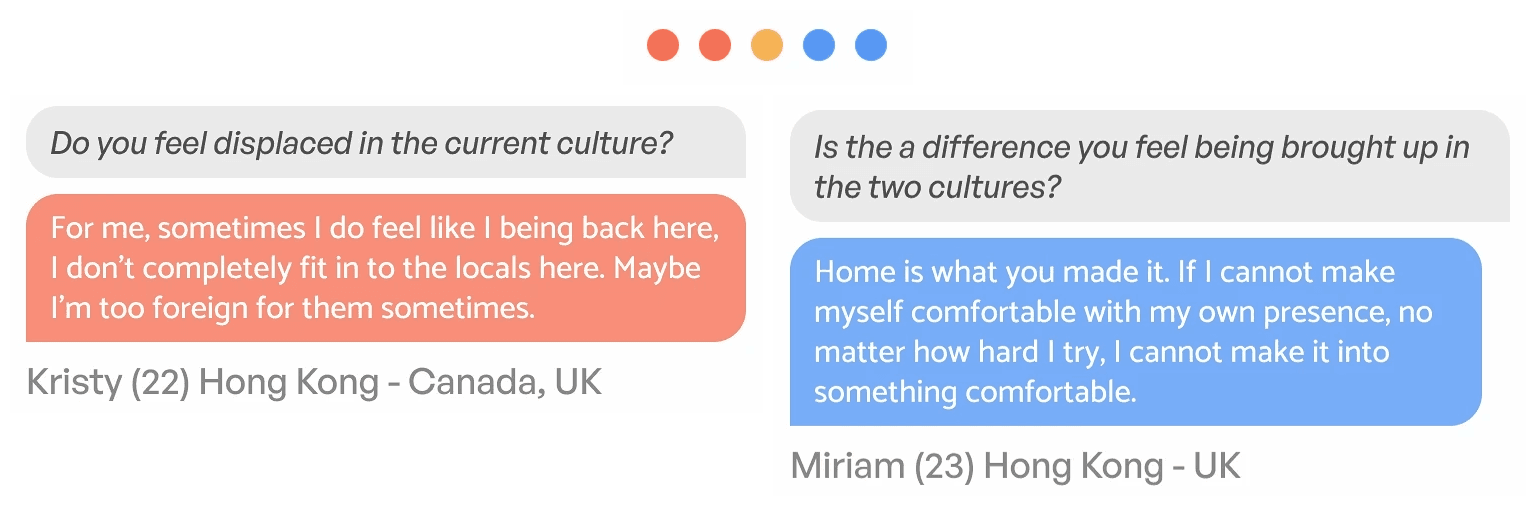
Round 1: Multicultural backgrounds (5 participants): how cross-cultural experiences shape identity, belonging, and displacement.
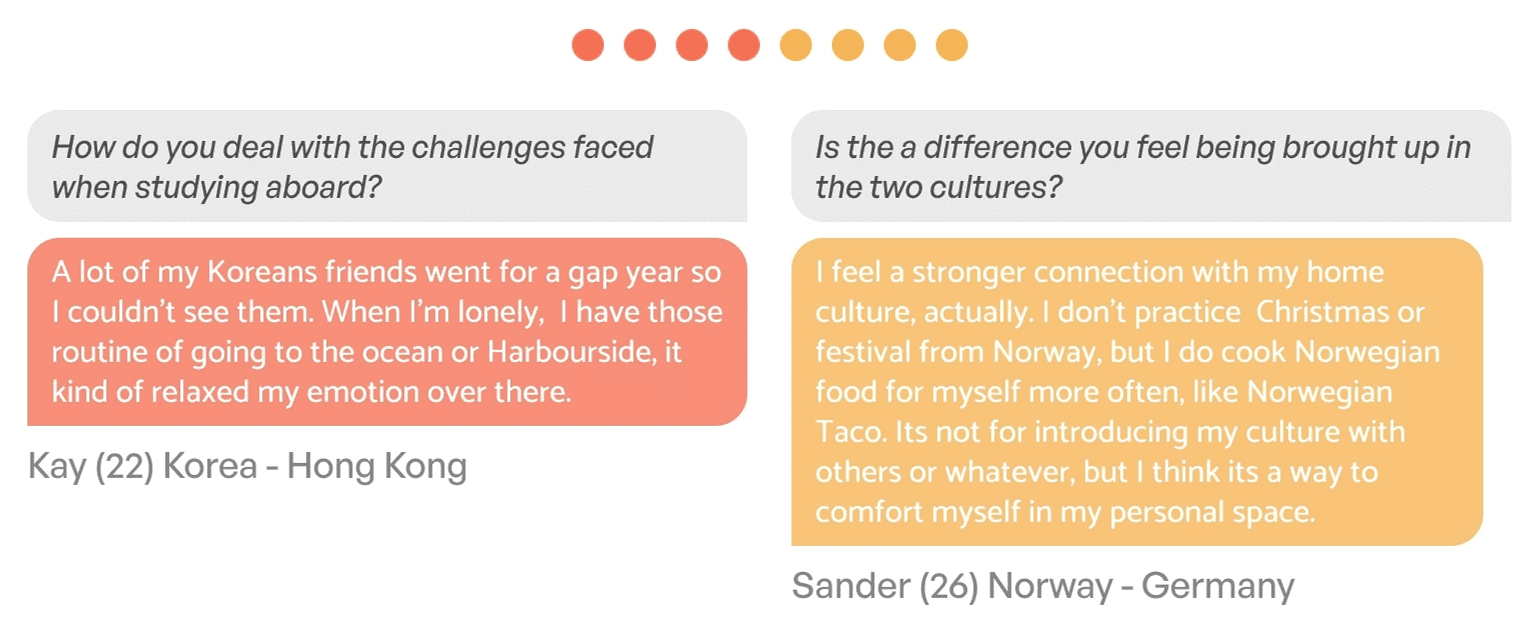
Round 2: Study abroad & exchange students (8 participants): when culture shock peaks, what intensifies it, and what coping strategies emerge over time.
Key Insights
Adaptation isn't one linear journey
Adaptation isn't one linear journey. It changes with how connected someone feels to the host culture.
Findings
- If someone struggles to adapt, they often hold tighter to their home culture, creating an in-between state: physically abroad, emotionally elsewhere.
- If someone adapts deeply, challenges can resurface later through reverse culture shock, when returning home feels unexpectedly disorienting.
Design direction
The hardest moments come from abrupt transitions, not from cultural difference itself. Support students in building new routines gradually (and reflecting on them) so integration and reintegration feel more continuous.
User Journey
Before departure, while abroad, and after returning home
The Common Scenes Project supports the full study-abroad arc, grounded in the Culture Shock Curve.
Journey at a glance
- Pre-departure: anticipate culture shock + set intentions + pack a “ritual starter kit”
- Arrival / early weeks: observe the new environment and create gentle routines
- Mid-stay: sustain belonging through small, repeatable practices
- Preparing to return: capture key moments and prepare for transition
- Return & reintegration: process change and make meaning of the experience
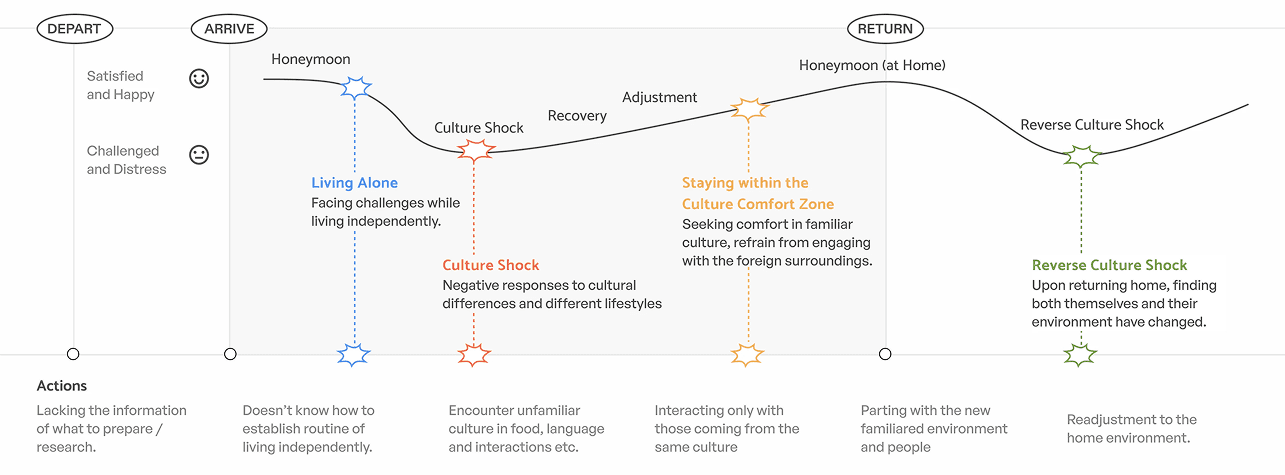
Exchange arc: five phases grounded in the Culture Shock Curve
Solution
A self-supported toolkit to reduce the shock of abrupt transitions
Pre-departure Taskbook
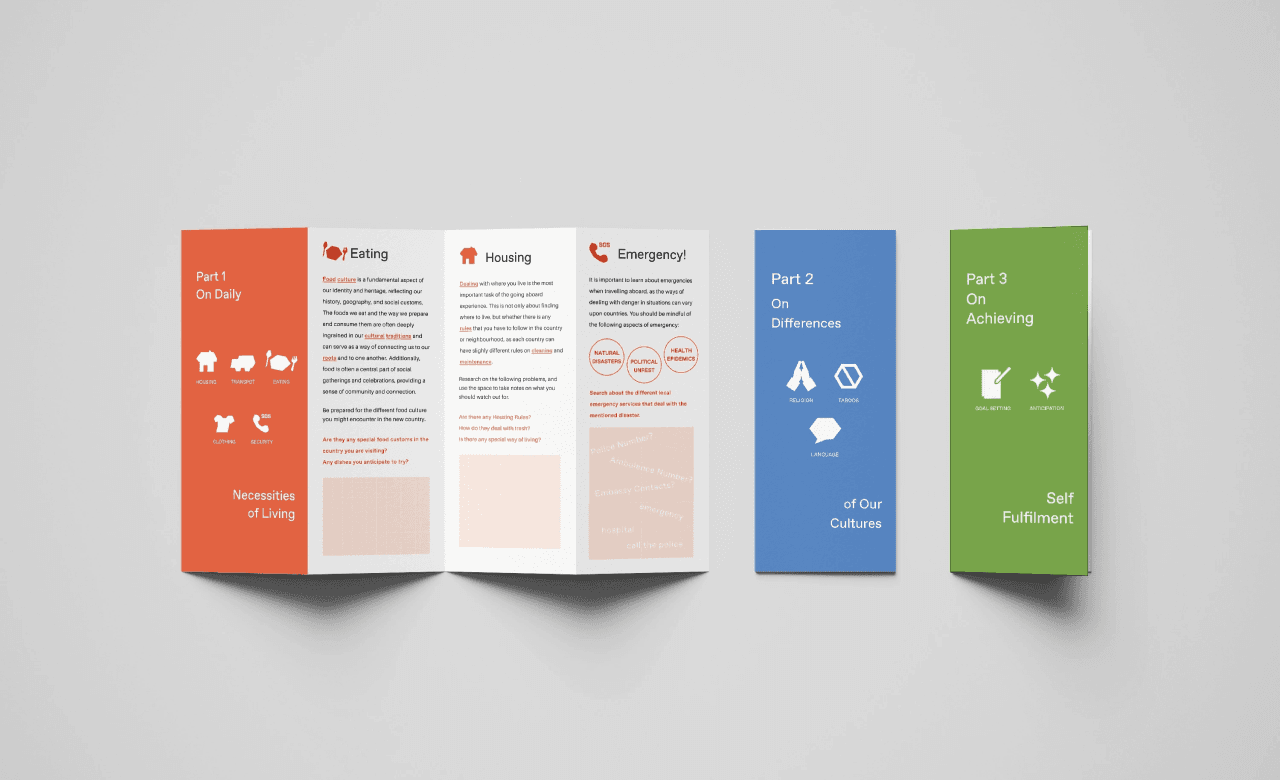
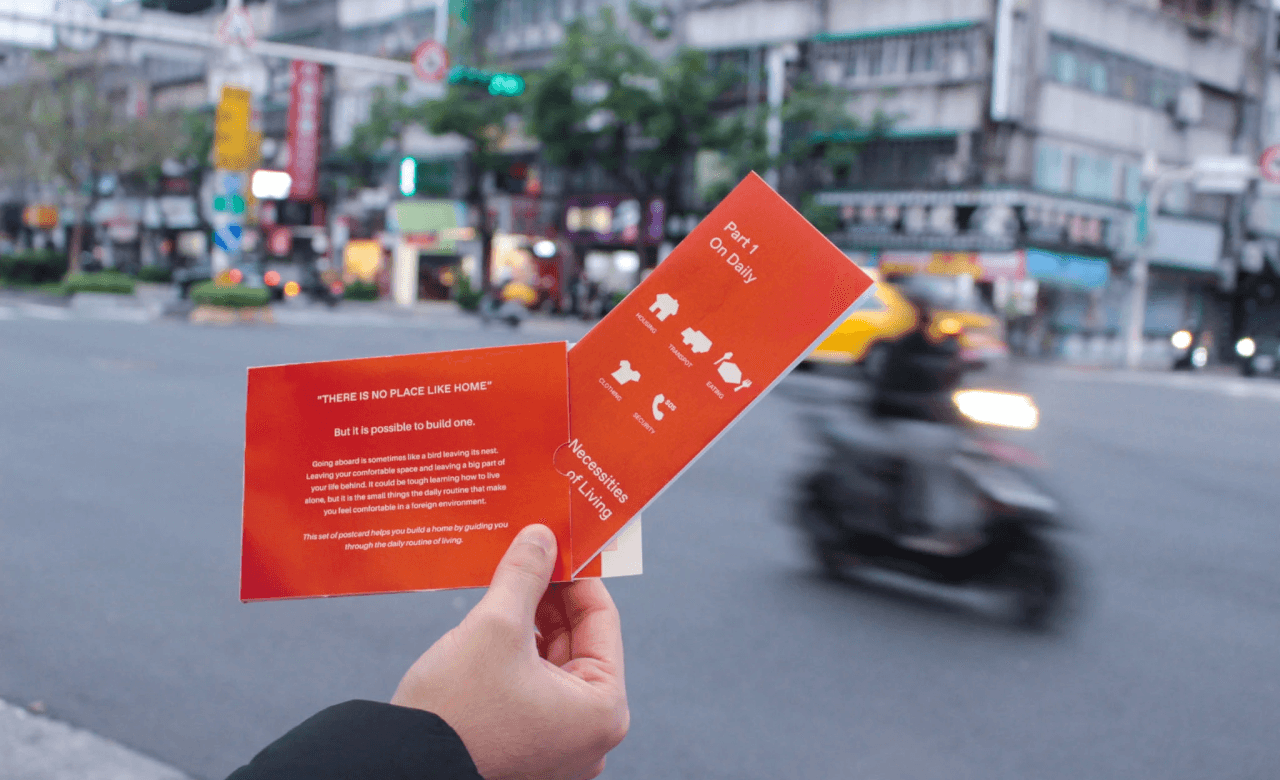
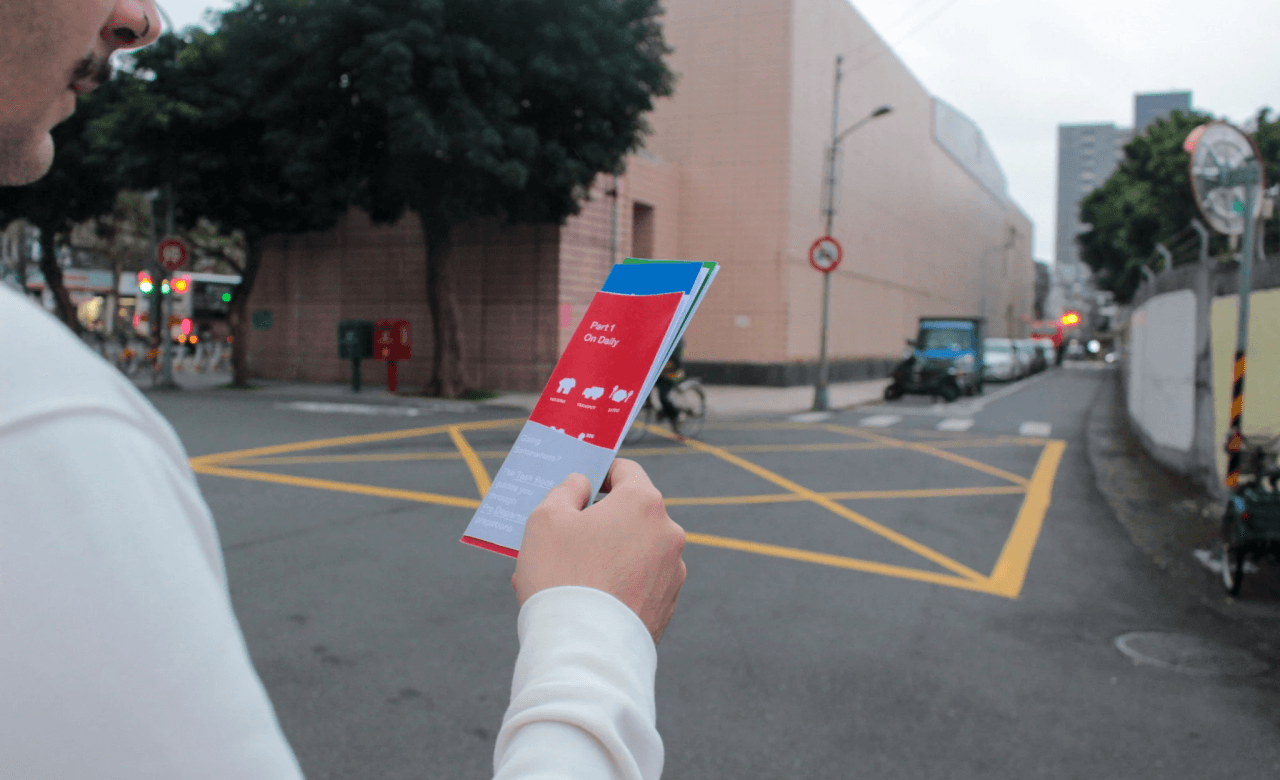
The pre-departure taskbook helps students prepare before leaving by focusing on three essentials: building practical confidence, anticipating cultural differences, and setting clear intentions.
Three objectives
- Daily necessities of living: collect everyday know-how (local systems, services, routines) and plan for emergencies, so students have a baseline for tough moments.
- Differences between cultures: surface what may feel unfamiliar (habits, norms, communication styles) to reduce the shock of first encounters.
- Self-achievement and fulfilment: set personal goals and define success, so students stay oriented once abroad.
Prompted Postcards

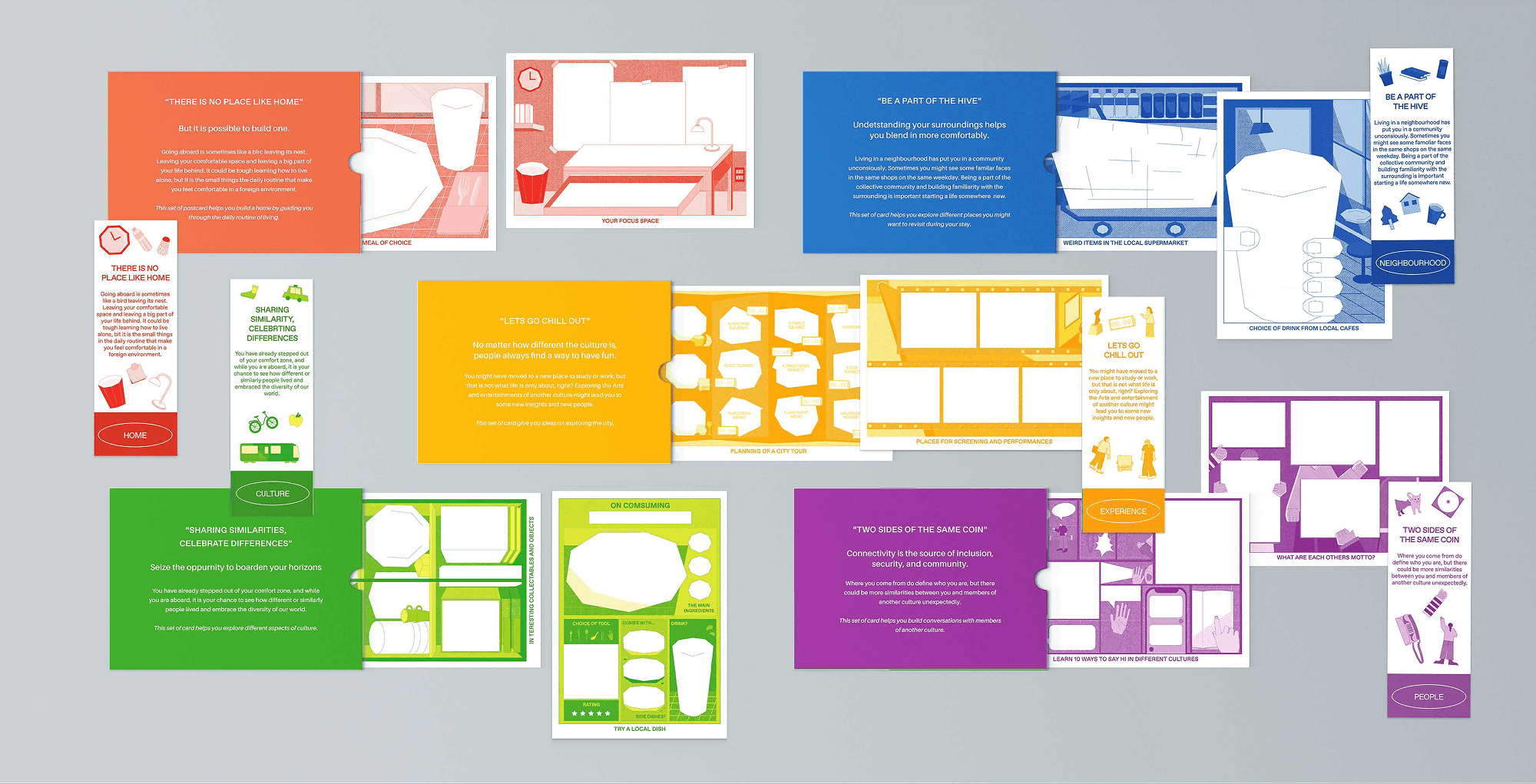
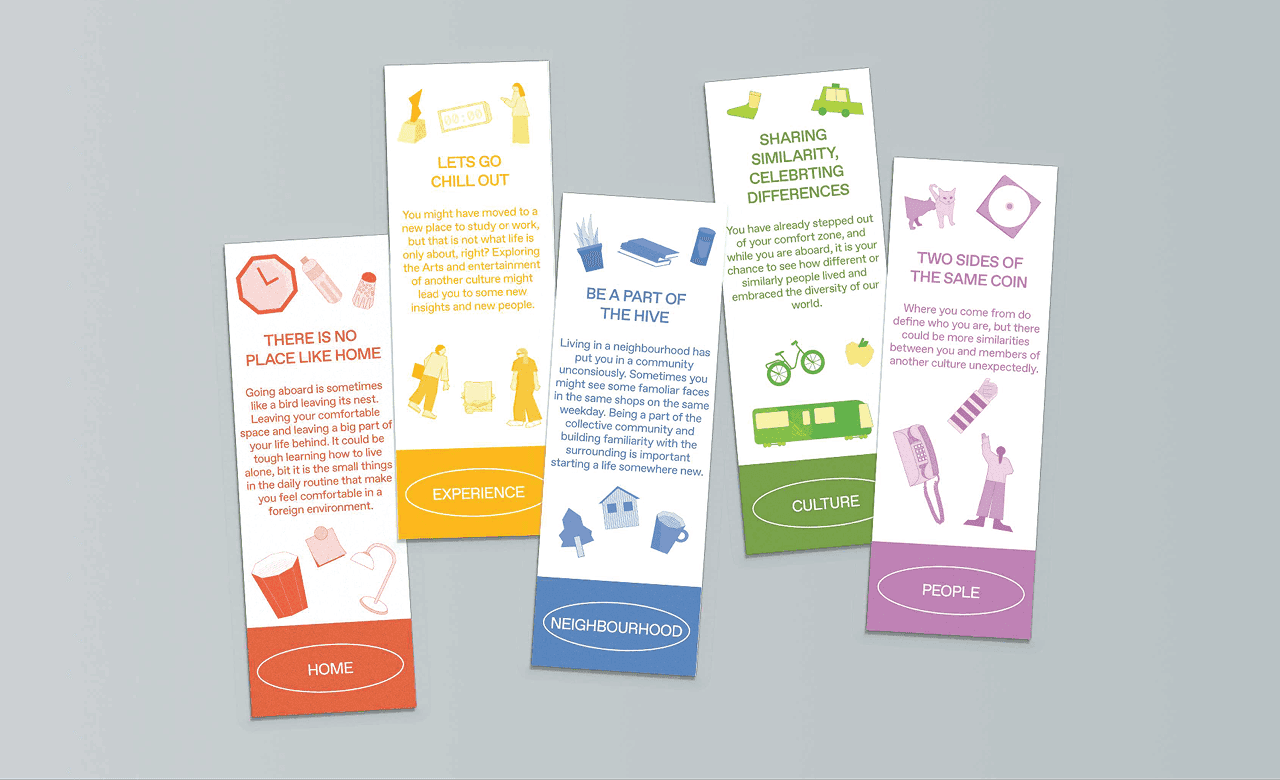
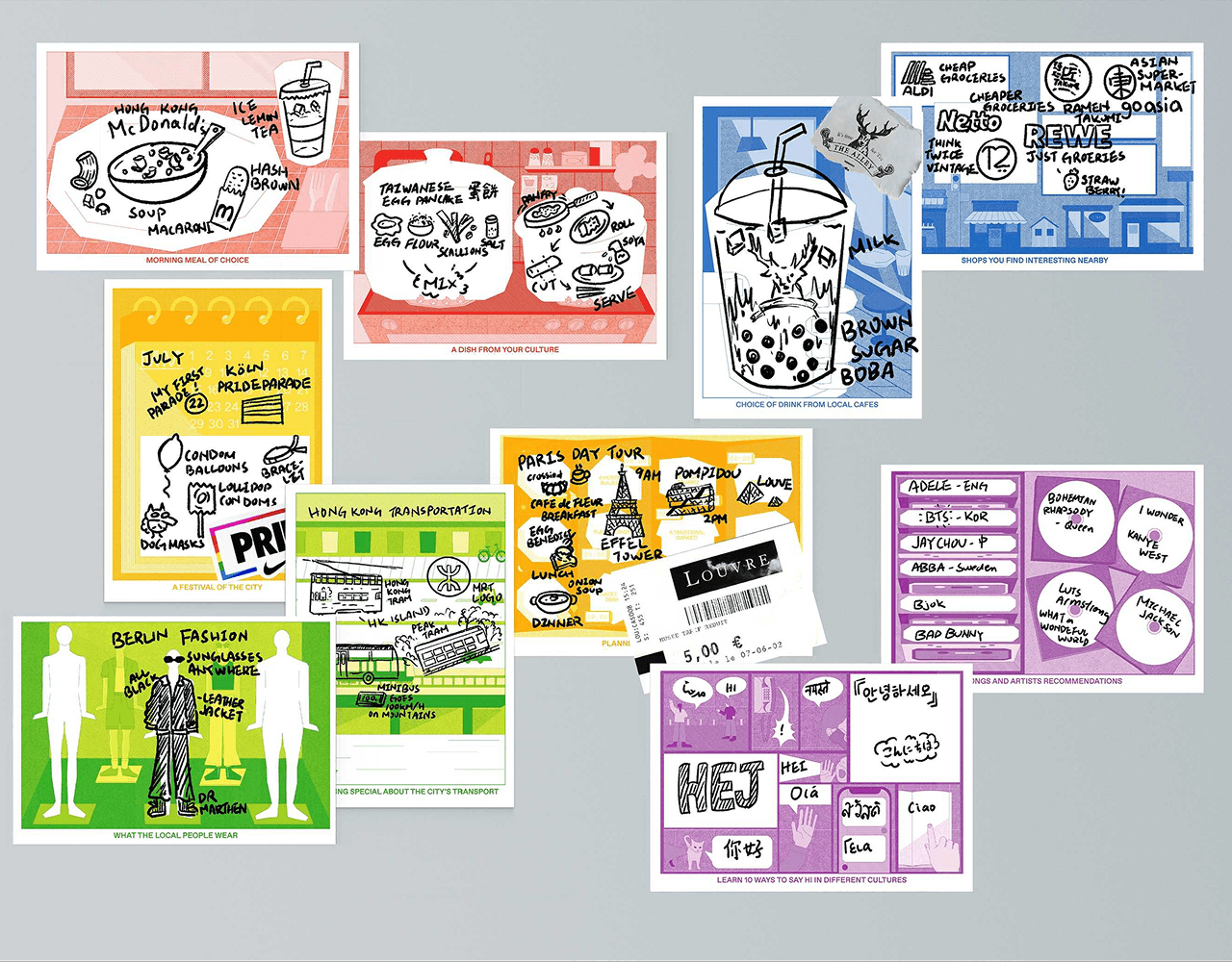
Prompted postcards help students notice and document everyday life across five dimensions: Home, Neighbourhood, Experience, Culture, and People: a simple ritual to return to when everything feels new. The format is intentionally physical: postcards are a fading medium in a digital world, and choosing paper reinforces tangible routines and a “slower” pace that supports the shift into living alone.
Two purposes
- Create steady rituals to reduce “shock.” By capturing small, repeatable moments (a meal, a route, a sound, a habit), students build familiarity over time and make the transition feel less abrupt.
- Gently expand the comfort zone. The prompts encourage students to look beyond what feels familiar, noticing local norms, places, and people instead of staying only within their home-culture bubble.
Zine Creation
The zine addresses reverse culture shock, the disorientation of returning home after time abroad. Using postcards with a single-color background, students scan their cards and isolate the written content as a “scribble” layer, which can then be overlaid across zines and other printable editorial pieces. The result is a self-made booklet that captures how both the student and home have changed.