Digimove
A fitness brand that turns women's everyday movement into micro-donations for the Atlas Foundation's mobile classroom, making exercise itself the contribution.
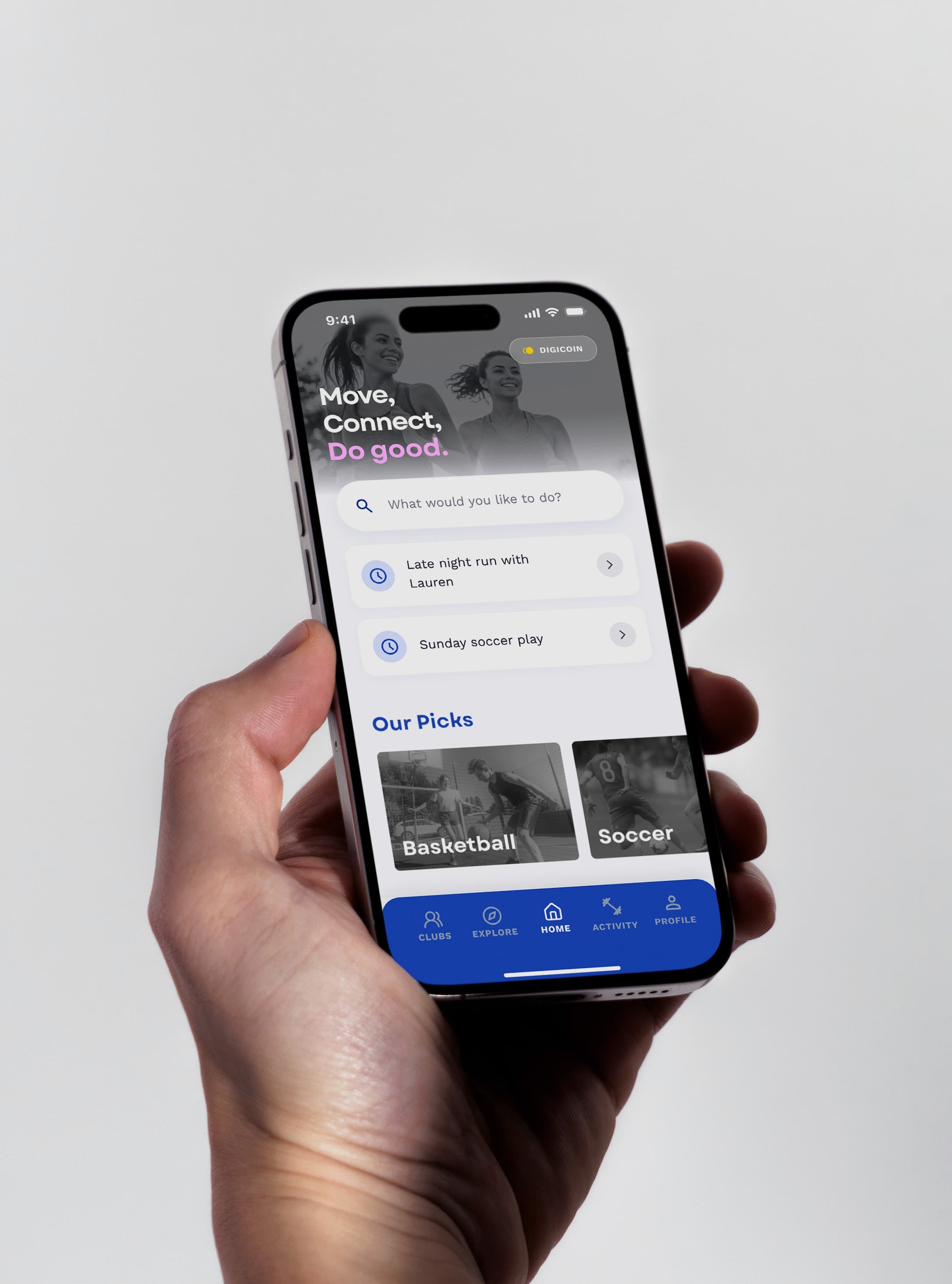
Core Concept
A fitness brand that turns women's everyday movement into micro-donations for the Atlas Foundation's Digibus — making charitable contribution invisible and making exercise itself the product.
My Role
- Brand identitylogo, colour system, typography, and campaign direction
- Product designuser flows, wireframes, and all screens
- Motion & communication designpromotional materials and brand in use
Overview
Exercise as a cause — without the ask
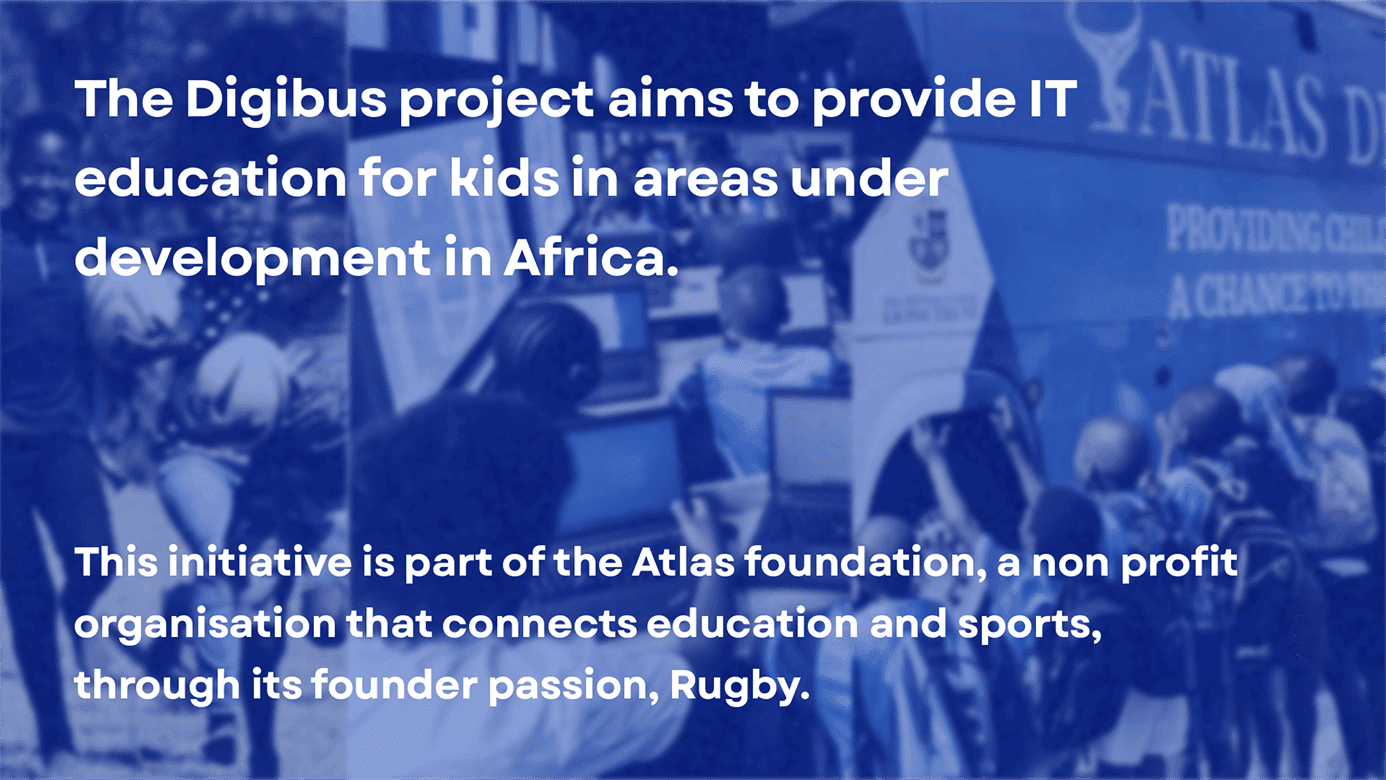
A fitness app for women that turns everyday exercise into micro-donations for the Atlas Foundation's Digibus — a mobile learning classroom serving rural Africa.
The Brief
The Atlas Foundation needed a fundraising mechanism that fits naturally into everyday life — without donation prompts, guilt, or traditional charity aesthetics. The challenge: make giving invisible, and make movement the product.
Problem Statement
How might we design a fitness brand that feels community-first and uplifting — without looking like a charity campaign?
Brand Identity
Market the app and make the mission instantly clear
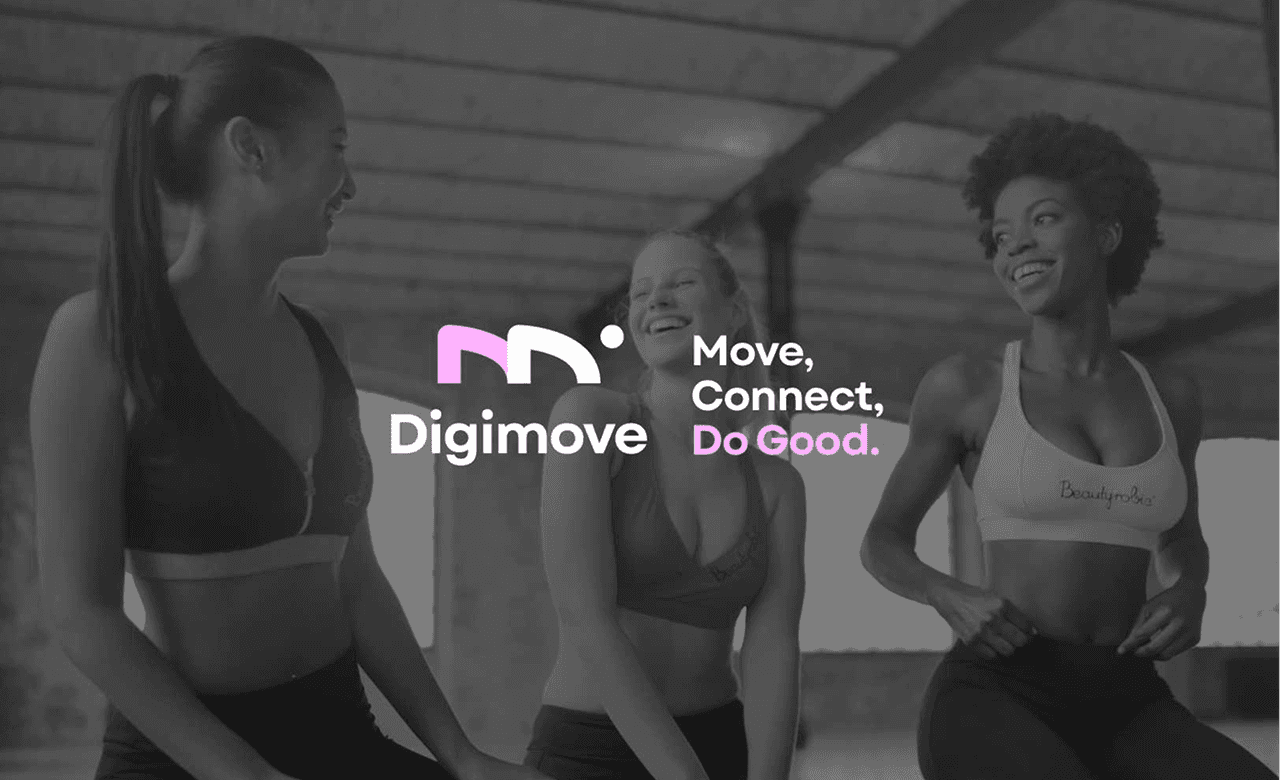
The brand does two things at once: position Digimove as an approachable fitness app and make the Digibus mission legible without it feeling like a fundraiser. A soft pastel palette keeps the tone inclusive and uplifting. A flexible logo system adapts from in-app UI to outdoor campaign materials without losing recognition.
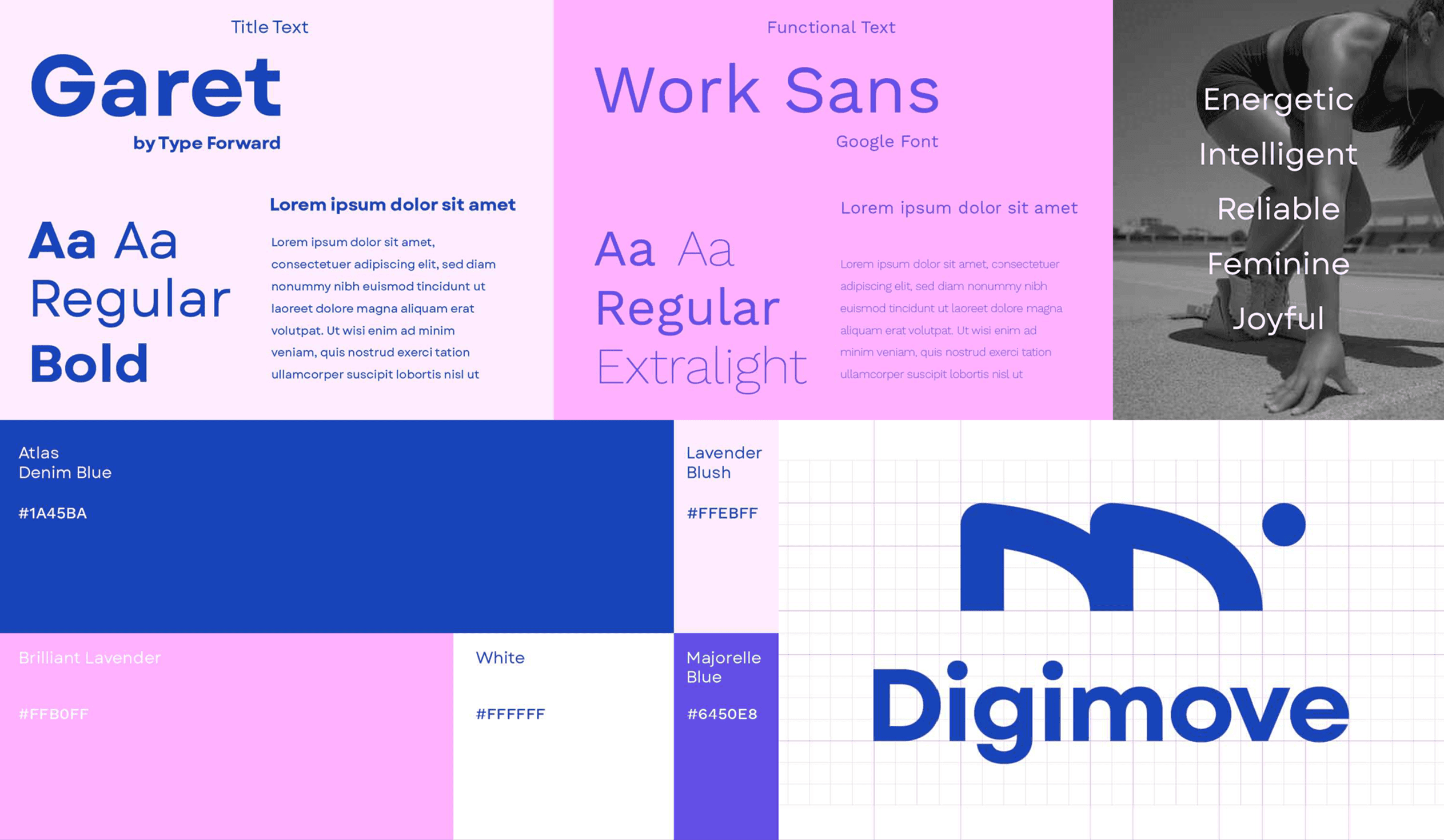
The ‘m’ is crafted to resemble a person poised to run — tying the wordmark to the app’s active identity.
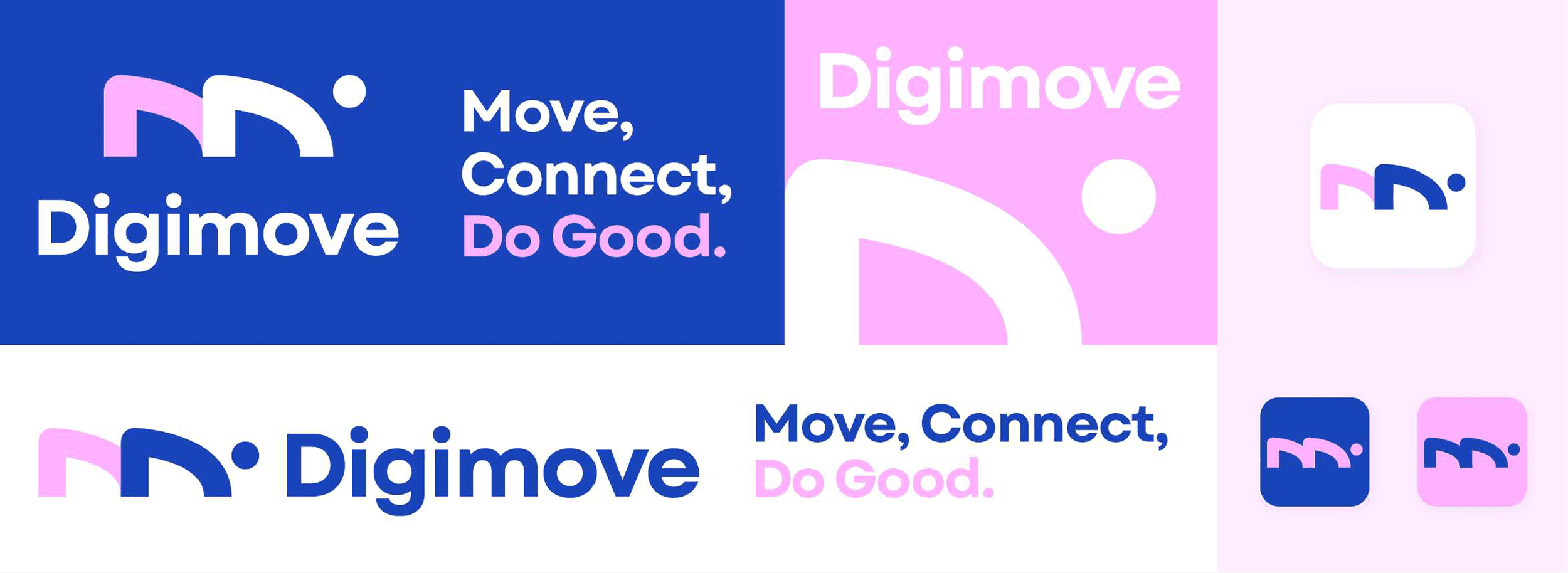
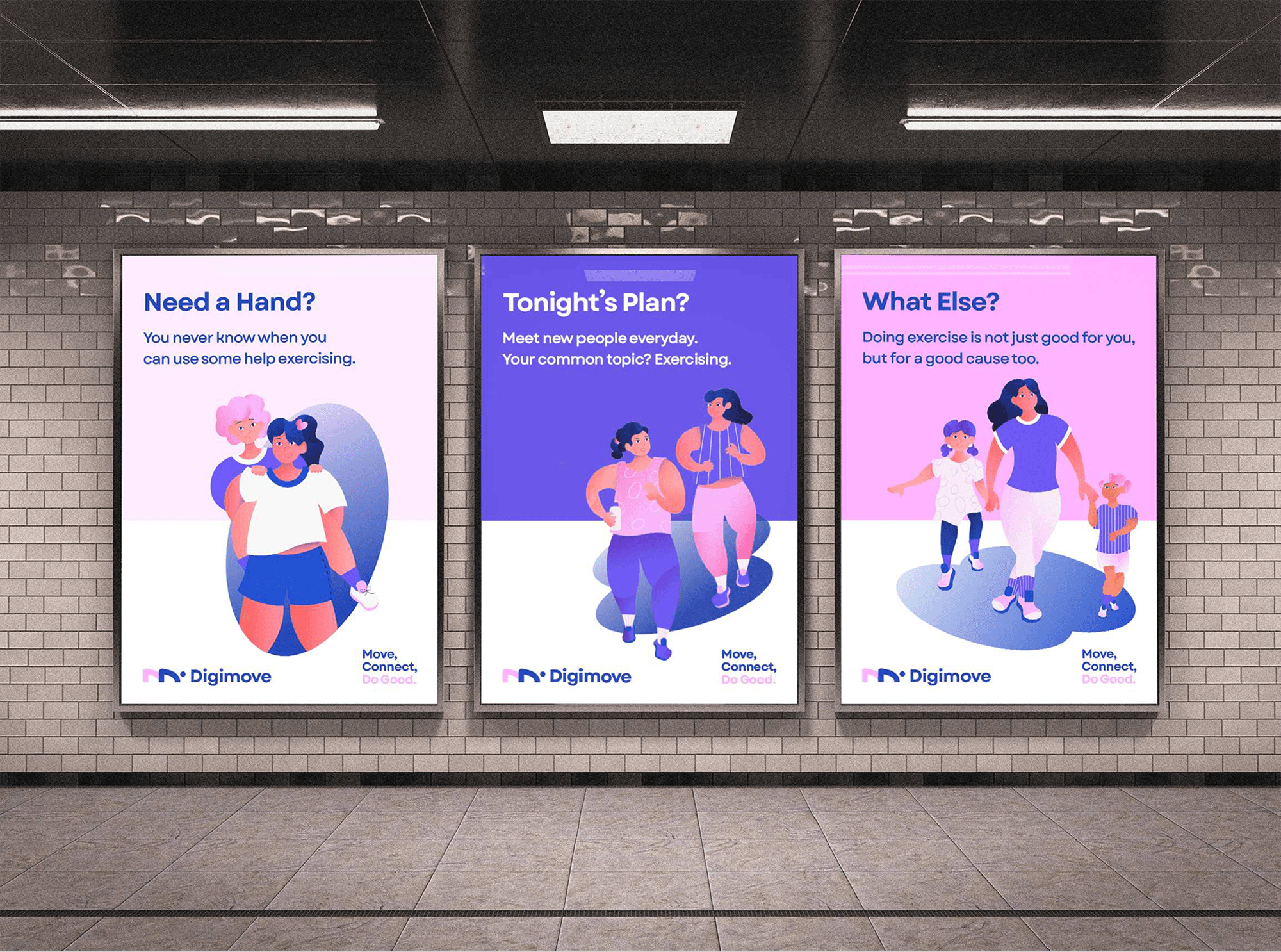
The personality centres on community and movement, not obligation or guilt — warm and social where most charity campaigns are earnest and serious.
Research & Discovery
What actually sustains behaviour
Three insights shaped the product direction: group accountability drives consistency more reliably than willpower; contributions feel easier when they're a byproduct of something already wanted; and visible progress metrics make habits stick.
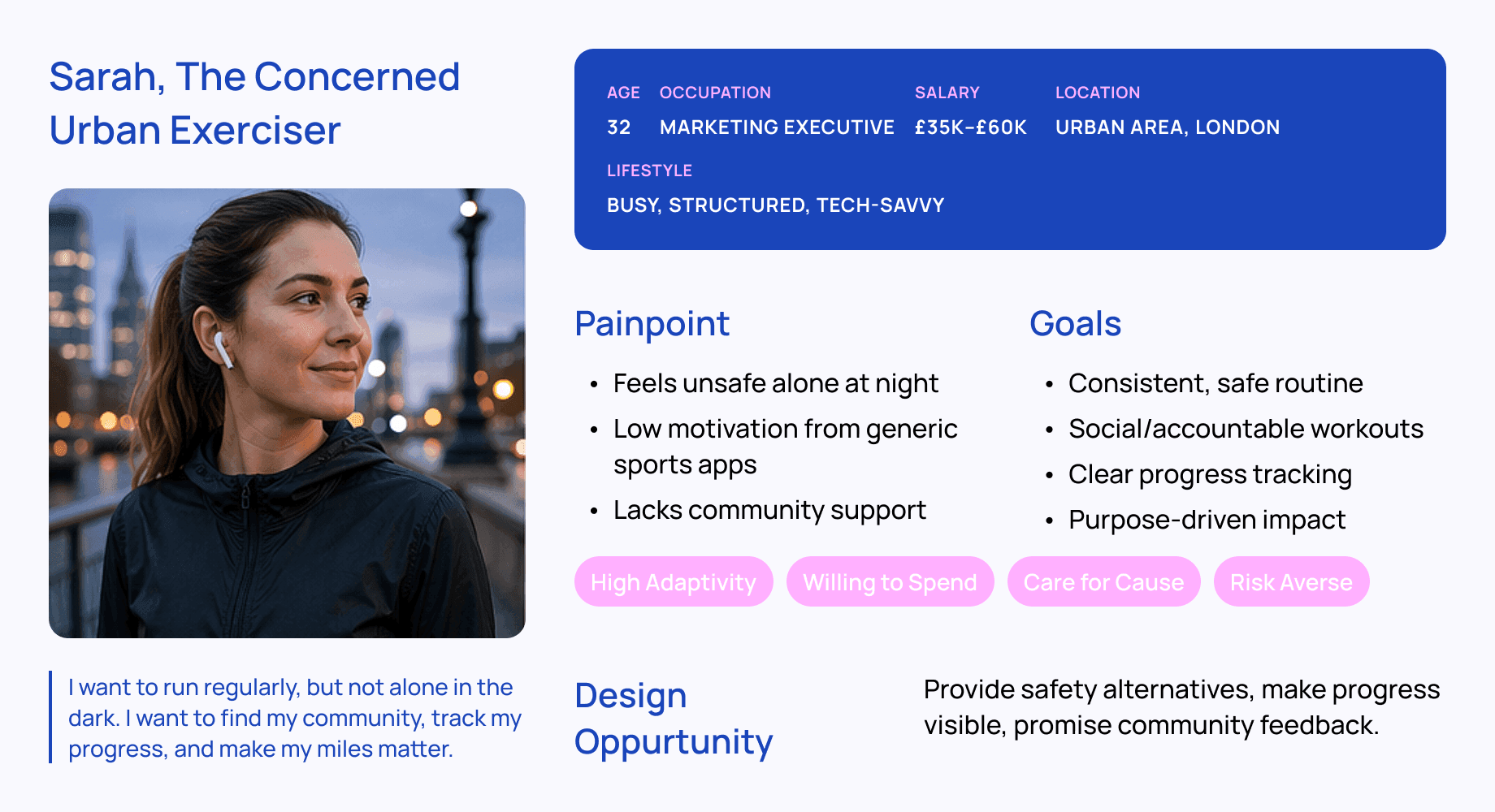
The primary user is an urban woman who wants to exercise consistently but feels uneasy doing outdoor activities alone. Motivation comes from community, visible progress, and a cause that feels tangible — not transactional.
The Solution
Three features carry the experience
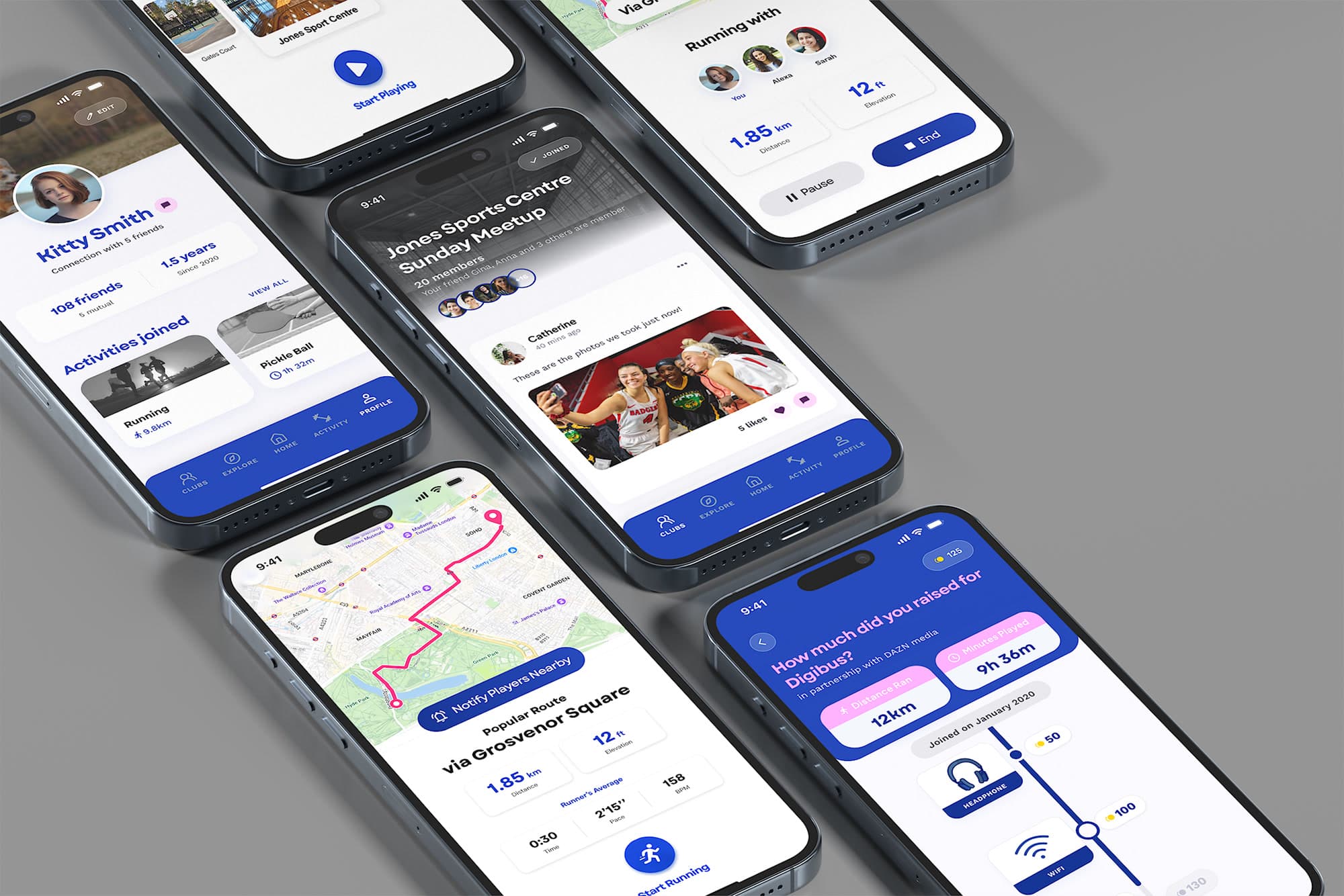
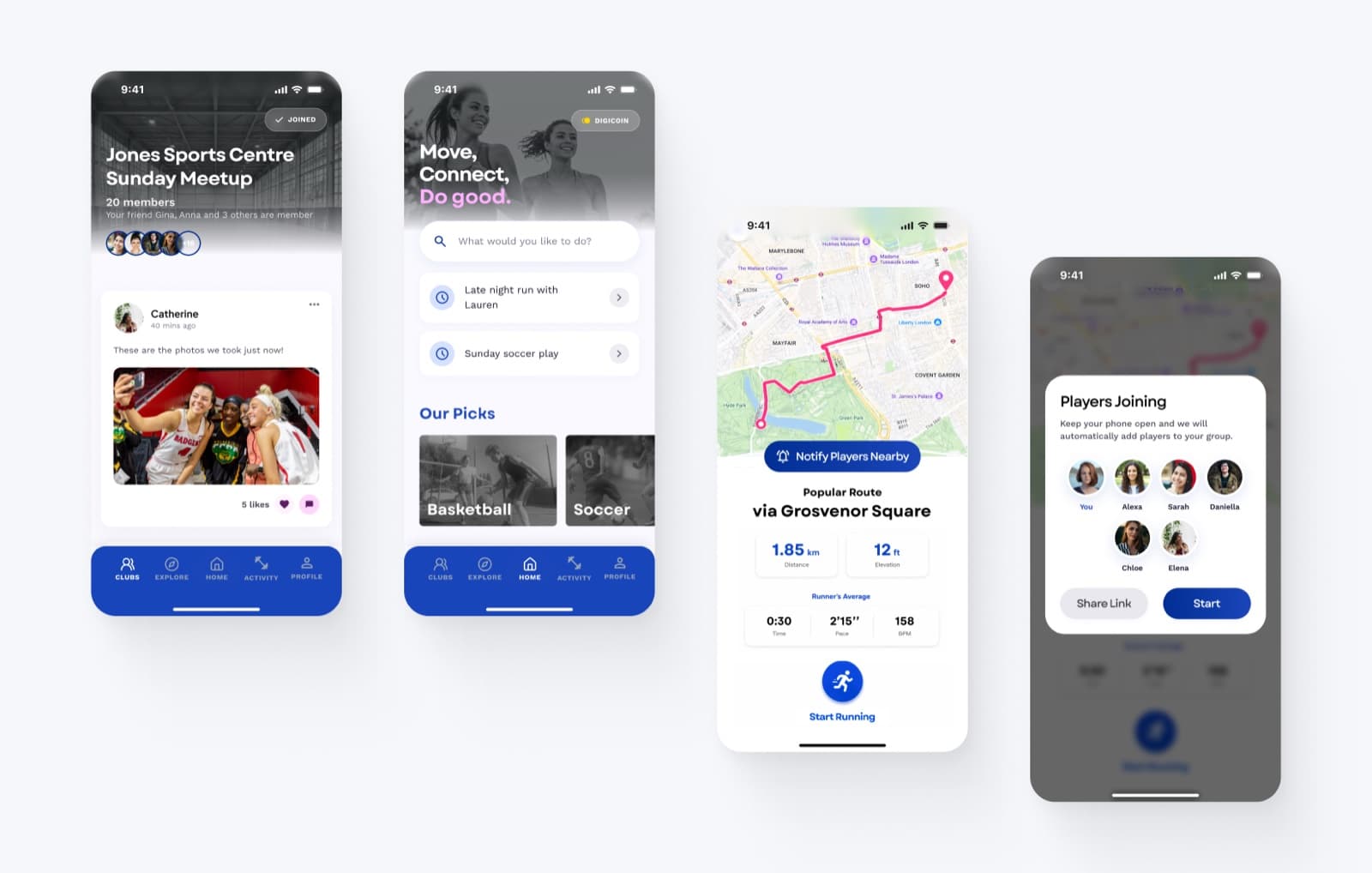
1. Clubs & Community
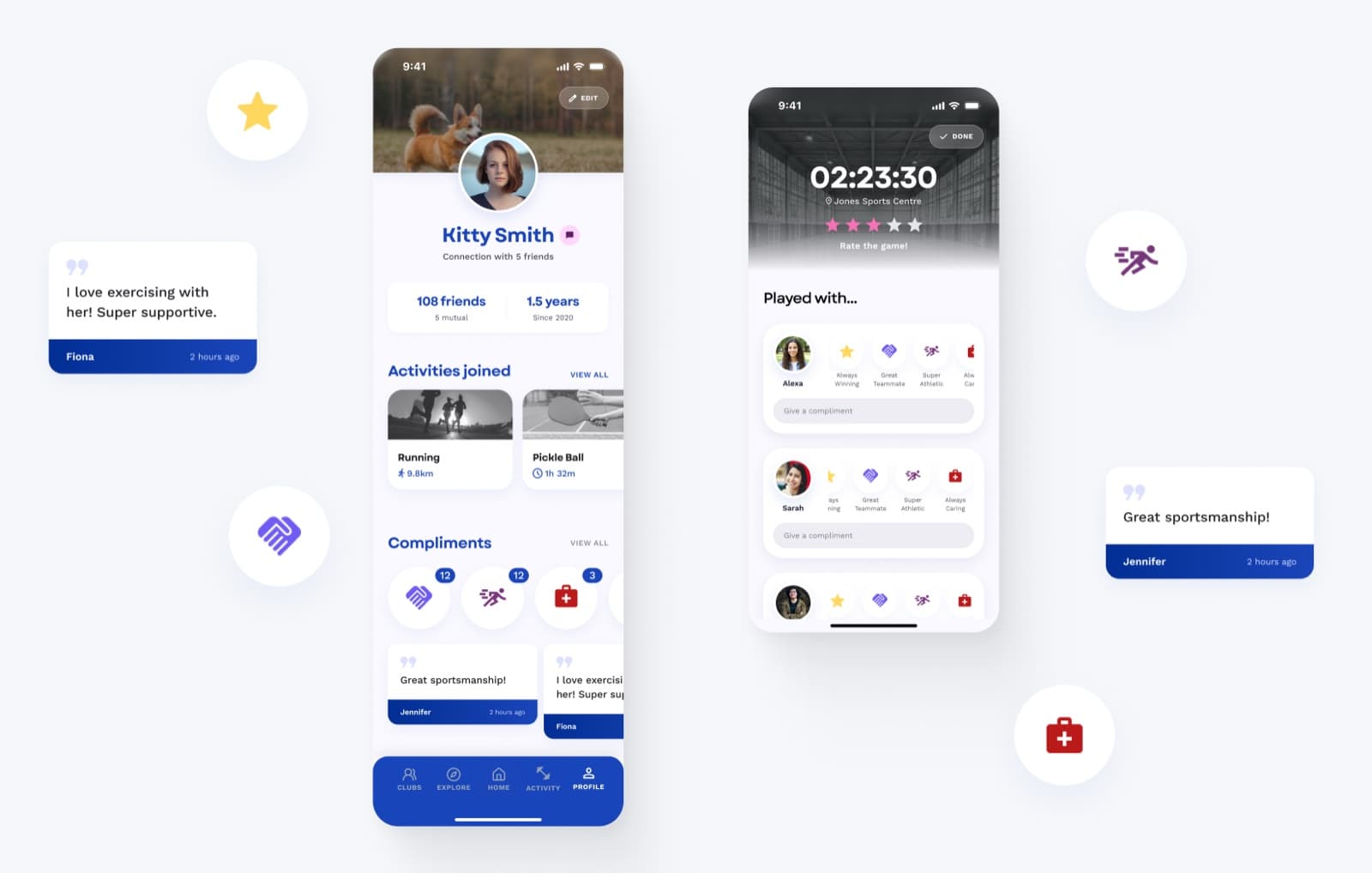
Users join clubs, exercise together, and earn badges and compliments for shared activities. Shifting workouts from solo to social addresses safety and turns habit-building into collective momentum.
2. Digicoins
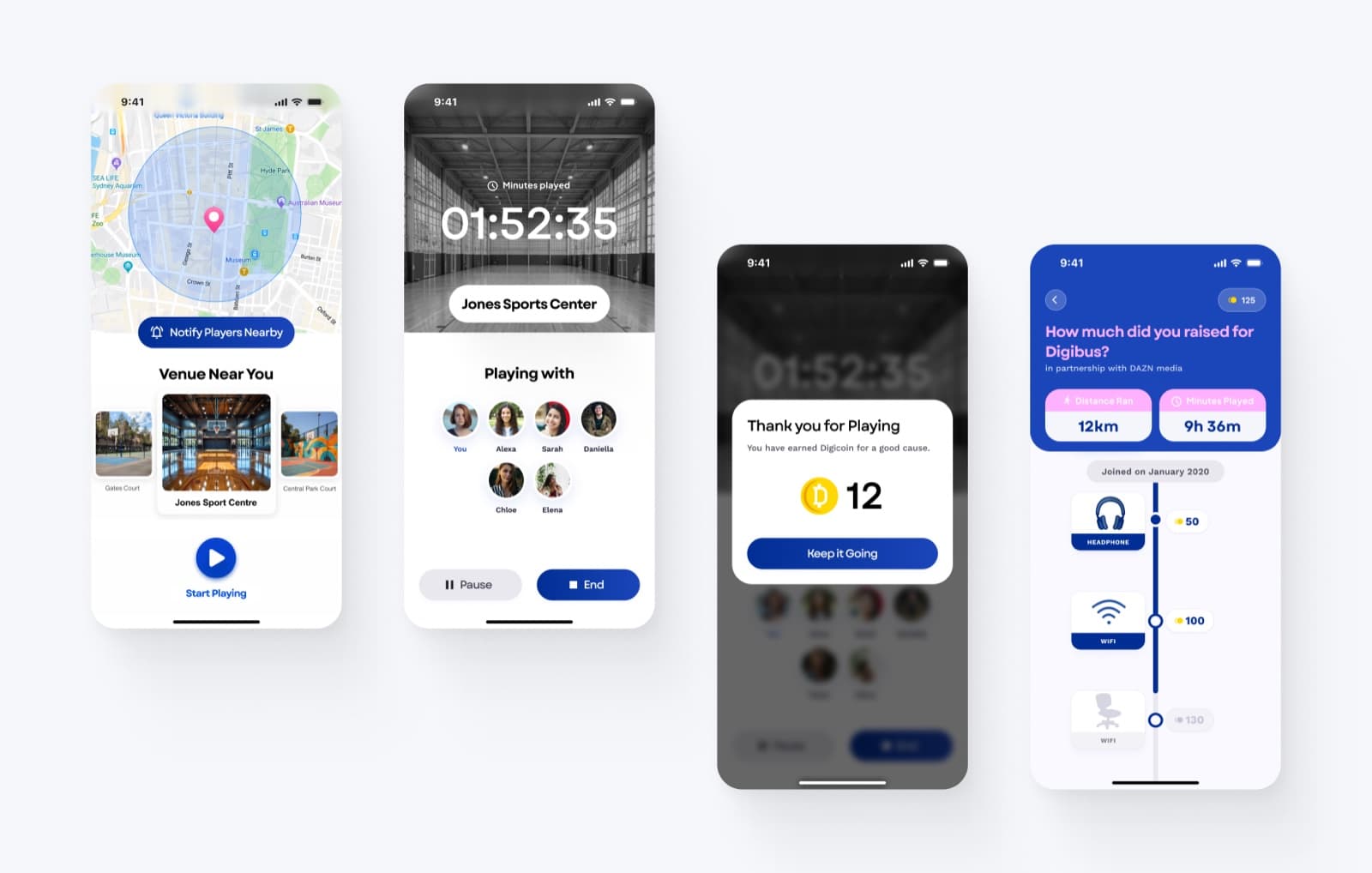
Every completed activity earns Digicoins, which convert automatically into contributions to the Digibus cause. Users never see a donation prompt — giving is a byproduct of something they already wanted to do.
3. Activity Tracking
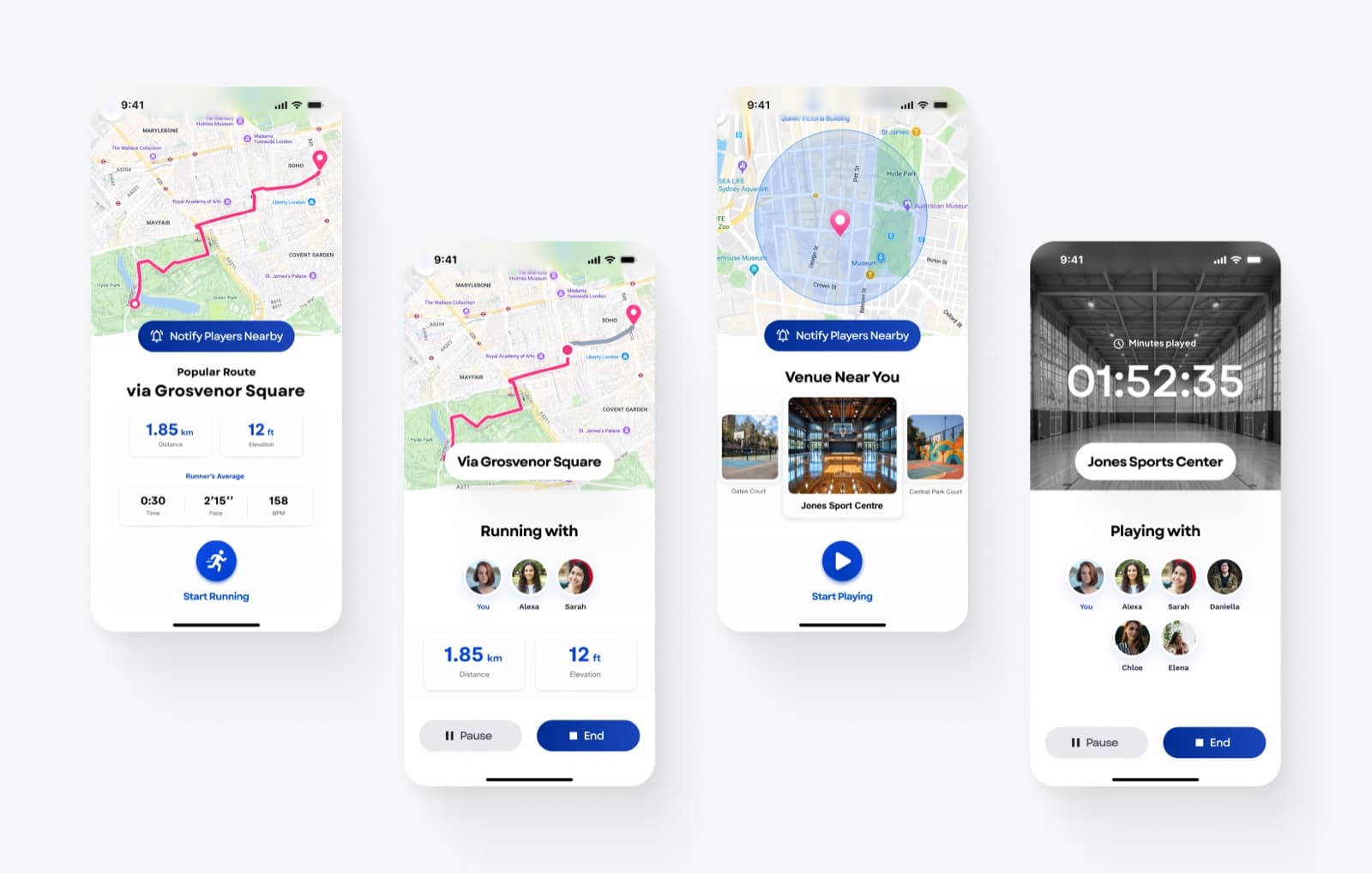
The app tracks duration and performance to make progress visible. The same activity data fuels the Digicoins mechanic in the background — no extra steps.
Outcome
A brand and product system built around everyday impact
Developed as part of a brand identity course at HK PolyU & UAL, the project produced a fully designed brand and product system — from visual identity to core app features. It demonstrates how cause-driven design can turn an everyday habit into social impact without friction. Giving doesn't require a prompt: it can be a side effect of something people already want to do.