Philo & Xeni
Designing an AI-powered hospitality layer that transforms host expertise into personalised discovery and contextual travel guidance.
Core Concept
A two-agent AI platform layered above P2P accommodation services. Philo helps hosts translate their local expertise into a compelling, personalised listing. Xeni gives guests a voiced companion that turns that knowledge into in-context discovery during the stay.
My Role
- User research & synthesishost and guest interviews, Reddit and platform analysis, insight generation
- UI definitionall screens from wireframes to high-fidelity across Philo and Xeni
- Visual identity & avatar designagent personas, avatar characters, and colour system
- PrototypingCSS prototype, presentation-ready for the final Spark Reply review
The Brief
Design and prototype an agentic experience for hospitality
A collaboration between SUPSI MAInD and SPARK REPLY. We focused on peer-to-peer accommodation rather than traditional hotels, where a single host often performs tasks typically handled by multiple hotel departments. This makes hospitality an ideal context for exploring how AI agents can support complex, people-centred operations.
While Airbnb provided our design context due to its mature ecosystem and rich host and guest interactions, the concept is platform-agnostic and transferable across hospitality services.
Research & Discovery
Synthesising what hosts and guests actually experience
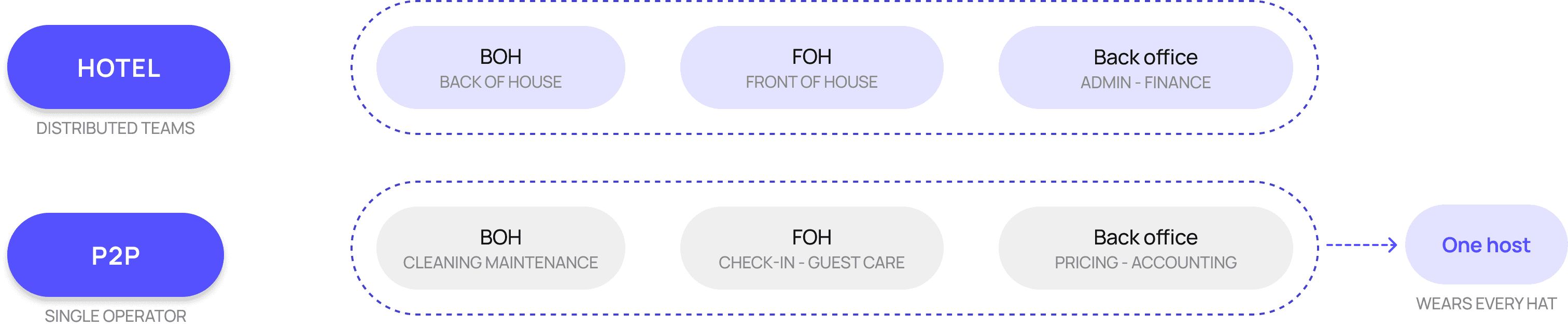
In traditional hospitality, entire departments handle what one P2P host manages alone: back-of-house, front-of-house, pricing, admin, guest care. In P2P, one person covers all of it, while also being expected to build a distinctive identity and deliver a memorable experience.
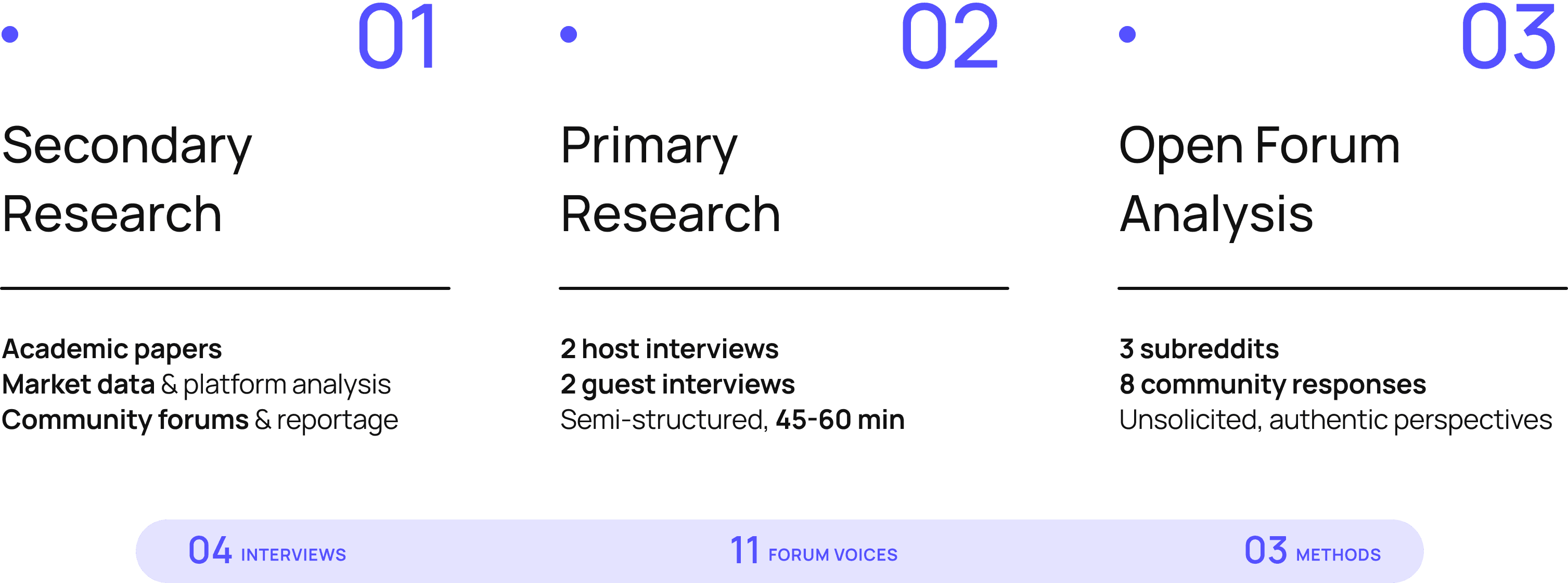
We synthesised host and guest interviews, Reddit forum communities, academic research, and platform analysis across several weeks.
What we heard from hosts
- Hosting becomes management. Operations crowd out hospitality.
- Differentiation is unclear. Listings blur into one another.
- Local value is underused. Neighbourhood knowledge stays invisible.
What we heard from guests
- Value lands only when it is relevant in the moment.
- Guests seek local connection beyond the four walls of a stay.
- Price wins by default, because discovery is too shallow to surface anything better.
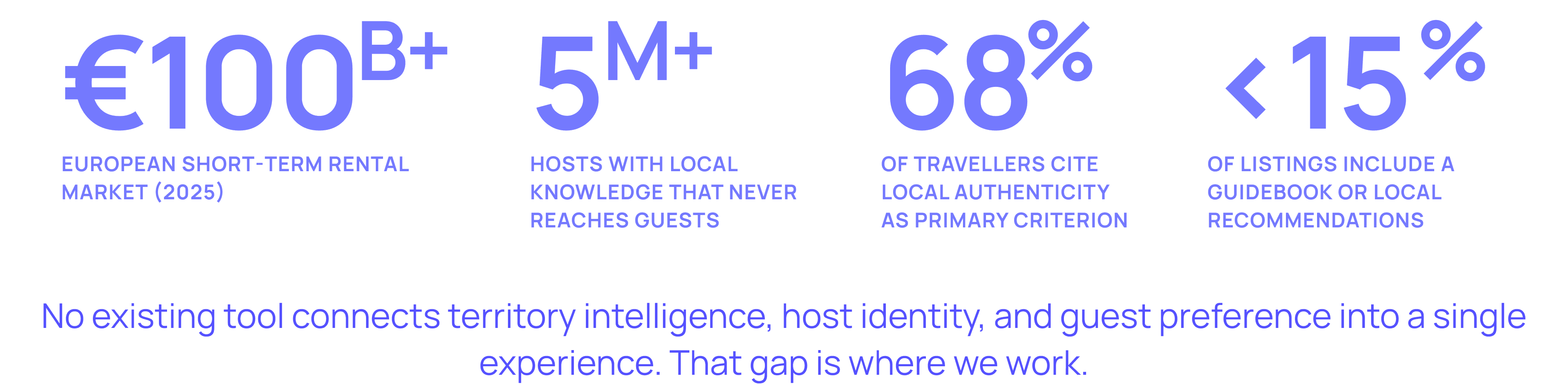
The gap between what hosts know and what guests can actually find is large, measurable, and largely unaddressed.
The Problem
Each actor in the system is optimising for the wrong thing

The deeper issue is structural. Each actor in the system is optimising for the wrong thing. A solution owned by one platform will always serve that platform first. The agent needs to sit above them.
Problem Statement
How might we build an intelligence layer that gives P2P platforms the tools to deliver personalised, locally rooted experiences that neither hosts nor guests could access alone?
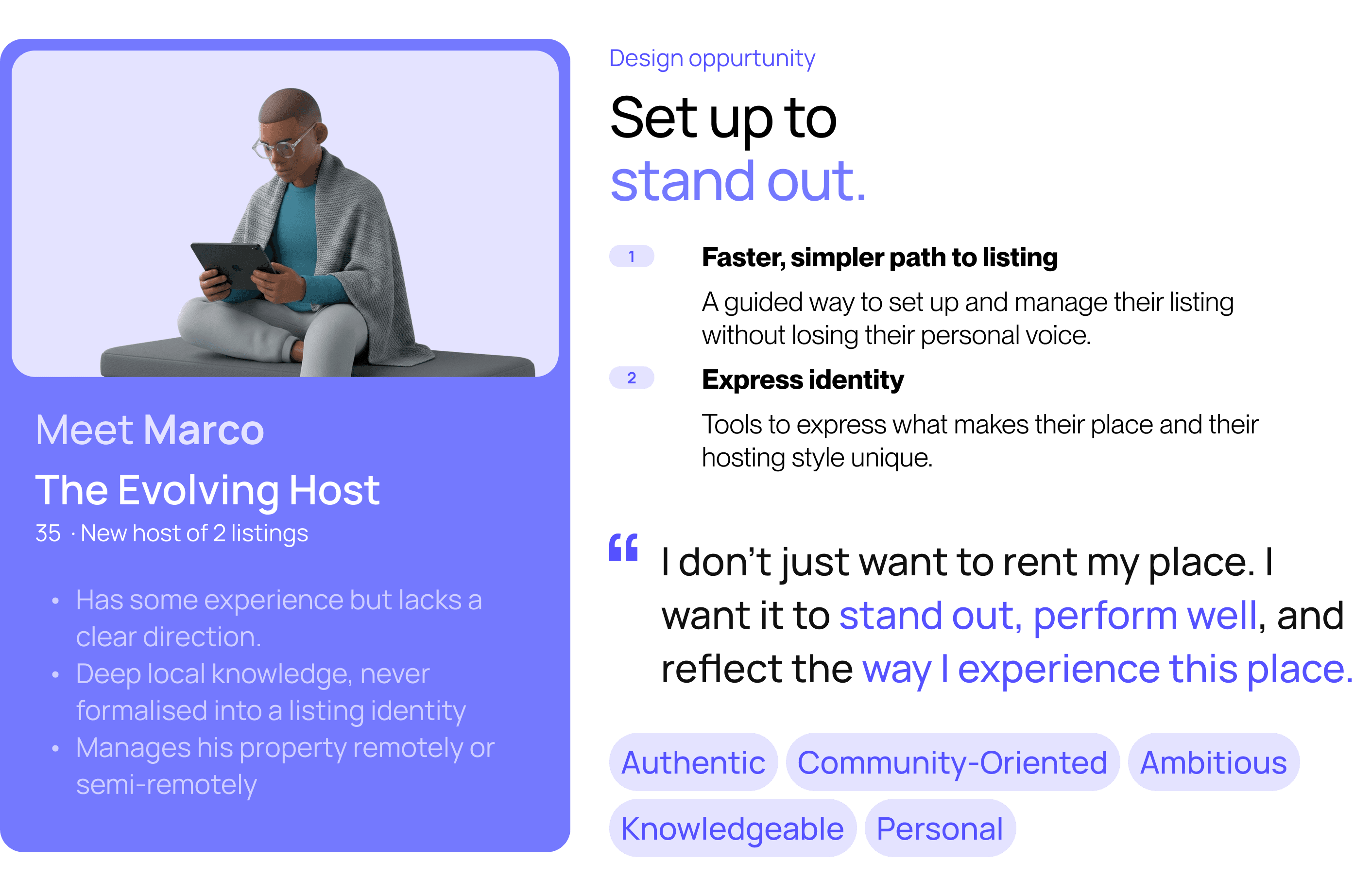
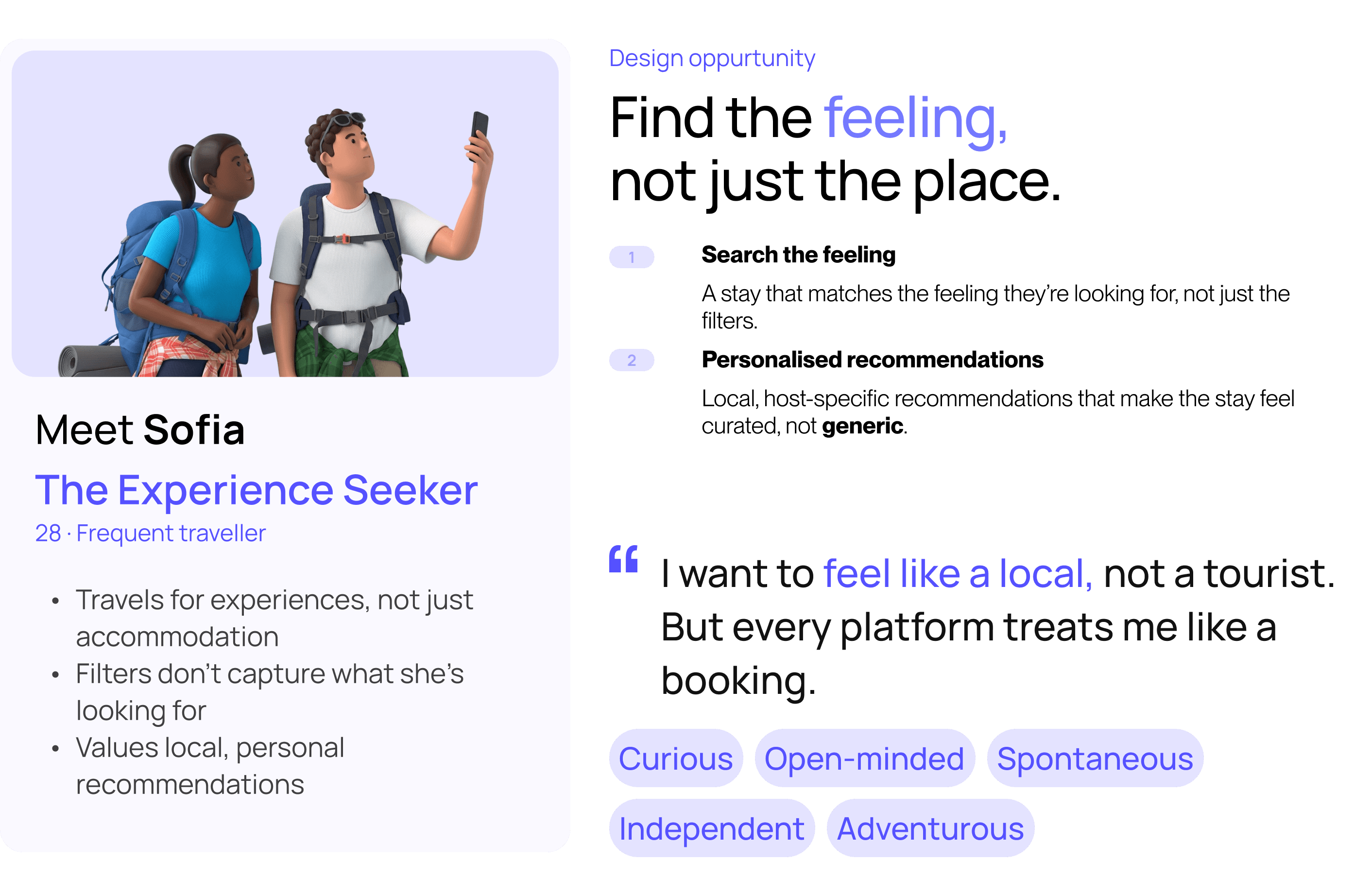
Archetypes
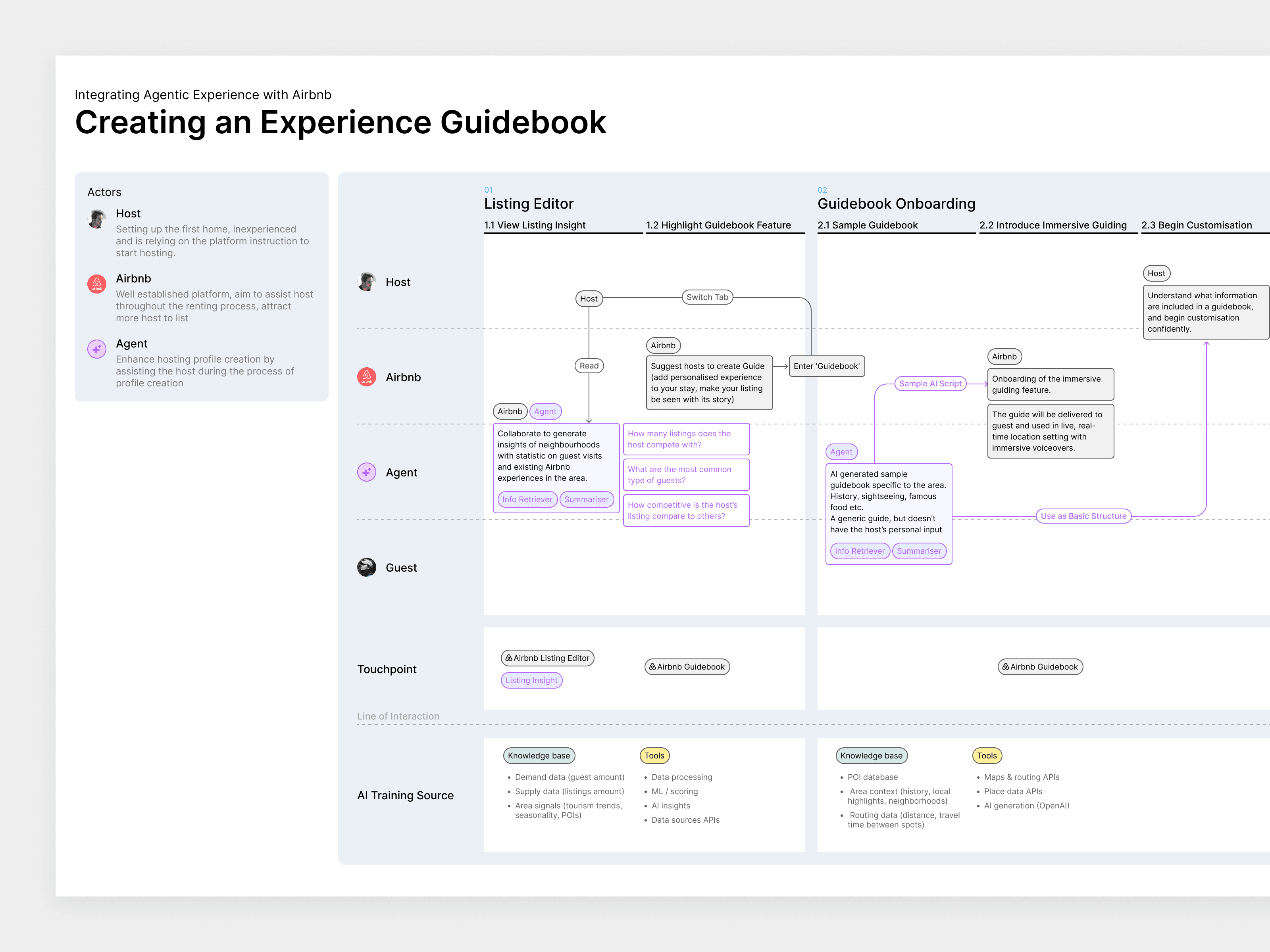
Agentic Experience Blueprint
Synthesising the research findings, we created an experience journey to understand how an agent could operate across a multi-actor service ecosystem. Given the involvement of the platform, host, and guest, the journey highlights the complexity of stakeholder interactions while mapping the agent's touchpoints, responsibilities, and the knowledge sources it relies on throughout the experience.
The Solution
Two agents. Four roles. One shared intelligence.
Philo & Xeni are not Airbnb features. They sit above the platform, designed to start with Airbnb and built to extend across the P2P landscape and beyond.
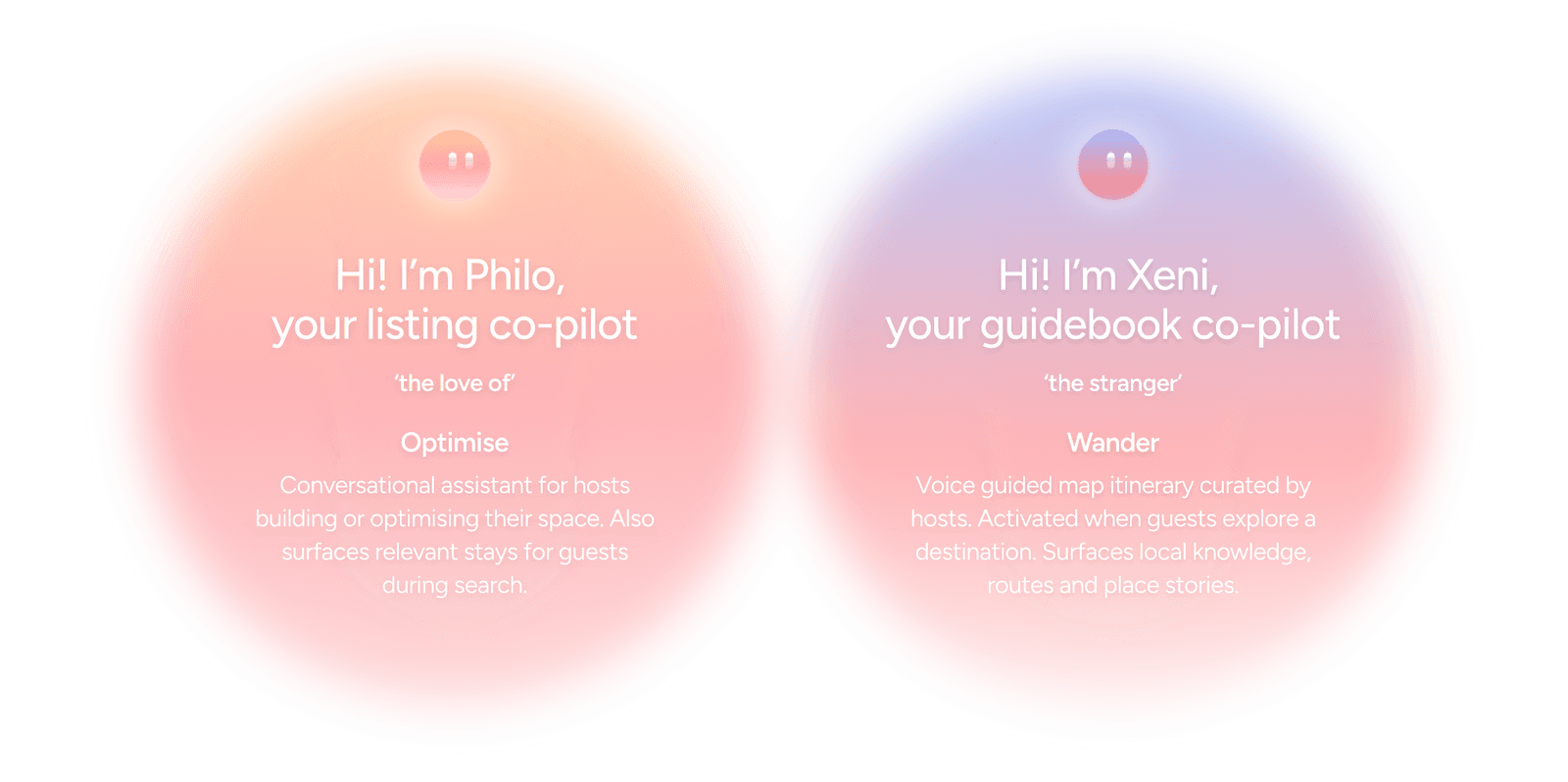
Philo (host + guest) and Xeni (host + guest), running on shared Location, User, and Market intelligence layers.
Conversational UI: designing the input model
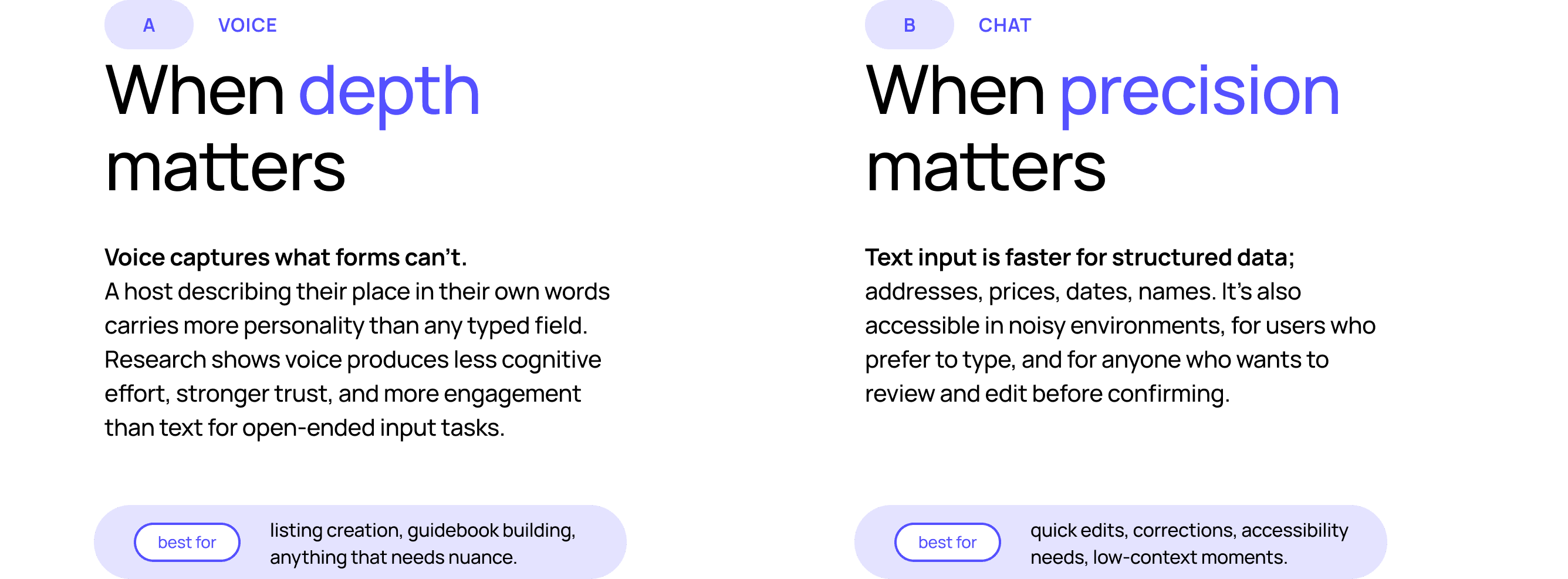
Airbnb's step-heavy listing flow exposed a key tension: determining not only what information to collect, but when and how it should emerge naturally through conversation. Iterations showed that voice and chat are not competing interfaces but complementary ones. Voice supports open-ended storytelling, while chat enables precise corrections and edits.
Philo, listing co-pilot
Conversational assistant for hosts building or optimising their listing, and for guests searching by feel rather than filter.
Host: Create Listing
The original Airbnb listing flow is highly structured, stepper-guided, and complex.
Conversational extraction
Philo transforms property setup from data entry into guided storytelling. Through voice or text, it captures and validates listing details while populating the listing in real time.
Instant Edit
A core function of the conversational UI is instant editing and updating. Hosts can make changes in two ways: by selecting specific items directly from the listing preview, or by instructing the agent to revise the listing through natural language.
AI analysis
In parallel, it analyses competing listings, local demand, and guest segments to strategically position the property.
Territorial Insights
Neighbourhood context, nearby POIs, and local character are automatically enriched through territory data.
Guest: Search Listing
Search by feeling, not by filter.
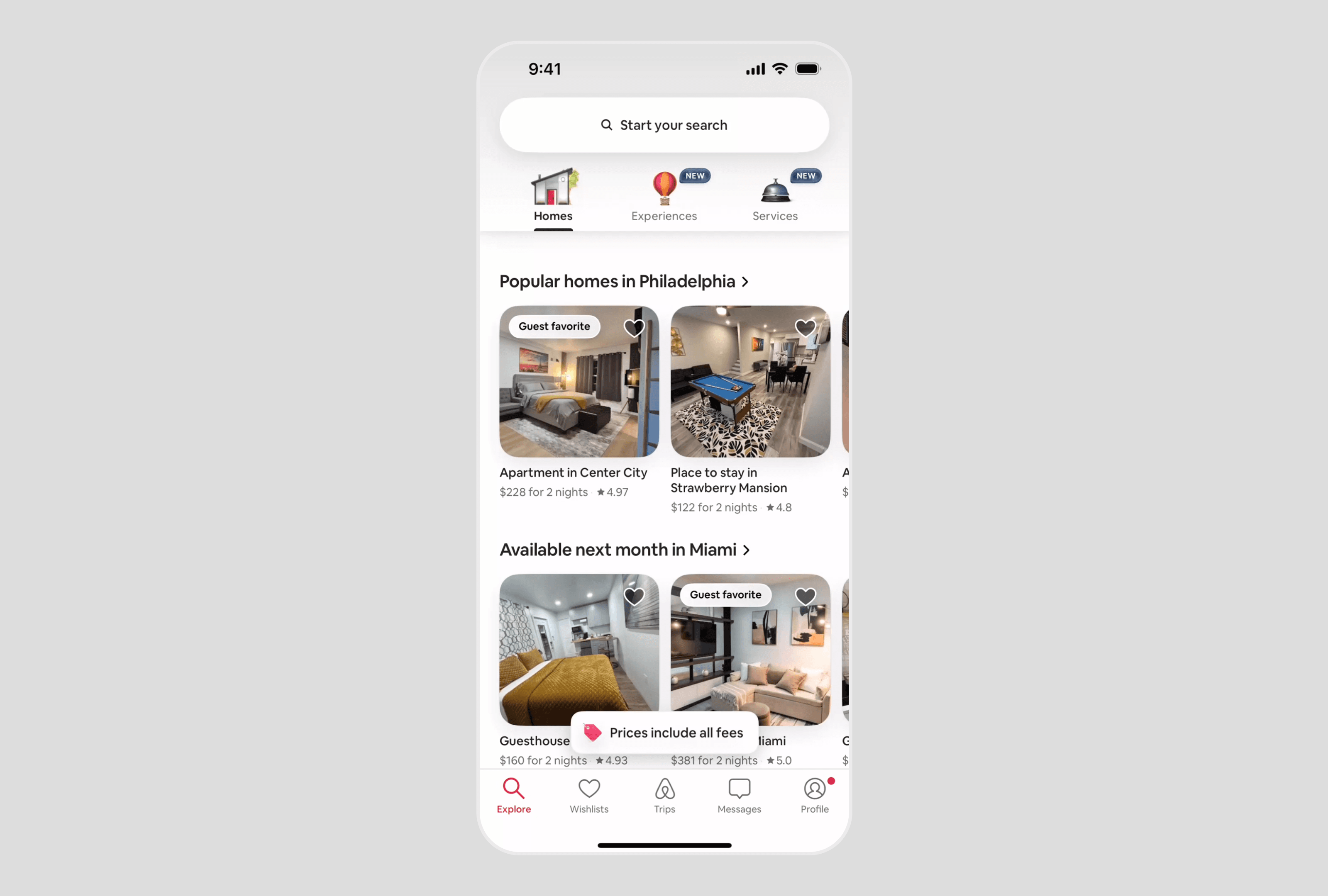
Most platform listing results are identical cards ranked by price and algorithms.
Philo reads mood and travel intent rather than keywords, builds a preference model from past trips and reviews, and returns results ranked by fit rather than by price.
Xeni, guidebook co-pilot
Voice-guided map itinerary curated by hosts. Activated when guests explore a destination. Surfaces local knowledge, routes, and place stories.
Host: Create Guidebook
The guidebook is Airbnb's valuable but overlooked function.
Unmute to view interaction
Xeni makes a host's local knowledge shareable. It elicits places, activities, city advice, and personal stories through conversation — the kinds of details that would never appear in a form field.
Local events, recent openings, and route data keep the guide relevant rather than just personal. The guidebook is living content: what's new in the neighbourhood surfaces for the next guest automatically, not just the one who visited last year.
Guest: Guidebook Experience
Platform communication is one-sided, and guests don't build connection with hosts — no community value that was promised.
Before the Stay: The host's character comes through before check-in.
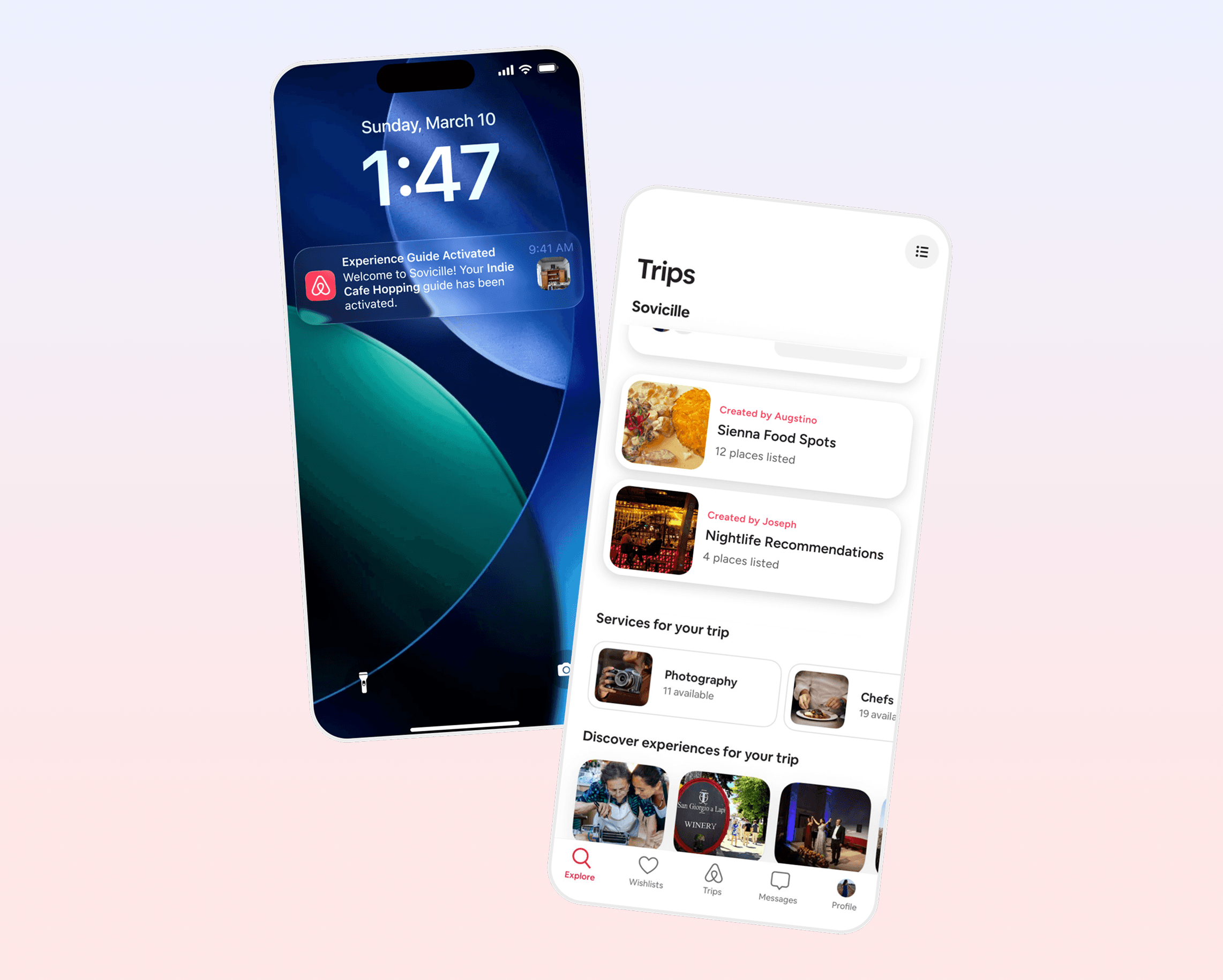
Receive Guidebook
The guest previews and customises the guide before booking: they see who the host is and how they experience their neighbourhood.
View and Customise
The guest previews and customises the guide before booking: they see who the host is and how they experience their neighbourhood.
During the Stay: A narrated journey through the place.
Live Map with Voice Narration and Real-Time Guidance
During the stay, a live map with voice narration and real-time suggestions adapts to where the guest is and what they have already done.
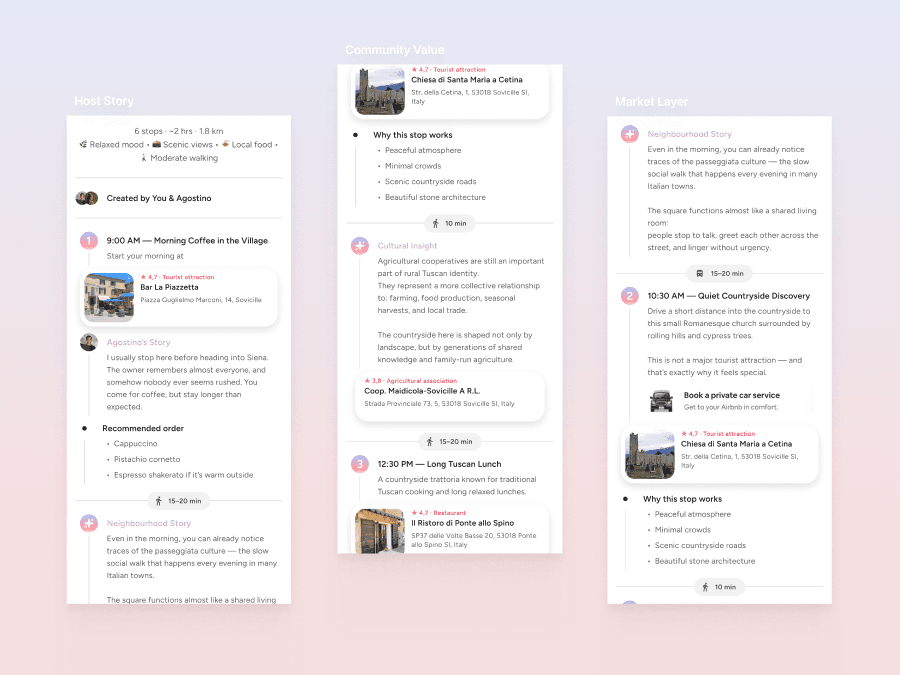
Host Story, Neighbourhood Story, Local Community and Affiliated Services
The guided experience mapping extends beyond host stories, combining local context and market intelligence to shape more relevant and valuable guest experiences.
After the Stay: The guide grows with each guest.
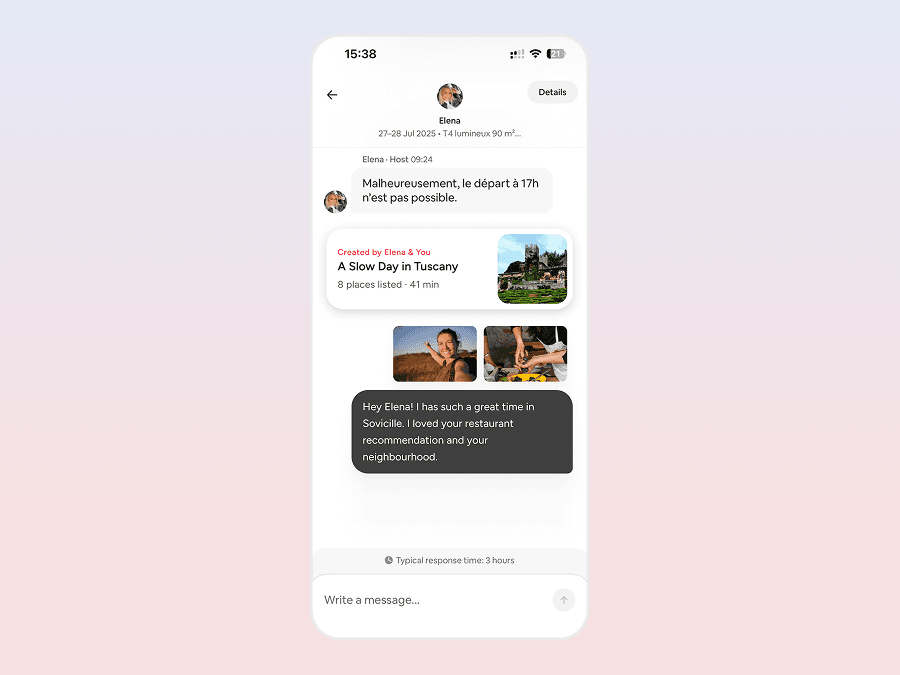
Feedback and Post Experience Interactions
Guests share stories and photos that feed back into the knowledge layer, making the guide richer for each visitor.
Shared intelligence
Host and guest journeys are separate experiences, but they run on the same knowledge base. What the host teaches the agent, the guest benefits from, and vice versa. The system operates across three layers: a Location Layer (POI database, routing data, spatial sequence), a User Layer (host tone and stories, guest preferences, dialogue memory), and a Market Layer (demand data, competitor listings, pricing patterns).
Outcome
From transaction to relationship
Philo & Xeni reframes P2P hospitality: from a transaction optimised for volume into a relationship supported by intelligence. Hosts get a way to express identity and local knowledge without adding operational overhead. Guests get discovery that works by feel, not filter. Territory knowledge becomes a living layer that genuinely benefits the communities hosting these stays.
The platform is designed to travel beyond Airbnb. Starting with P2P accommodation and expanding into mobility, restaurants and dining, local experiences, and broader travel. The business model is B2B SaaS: platforms license the intelligence layer via official API partnerships. Local businesses and organisations can contribute verified knowledge as a collaboration layer, surfaced as genuine recommendations rather than advertising.

There are no strangers here, only friends you haven't met yet.