Sony TR-1825
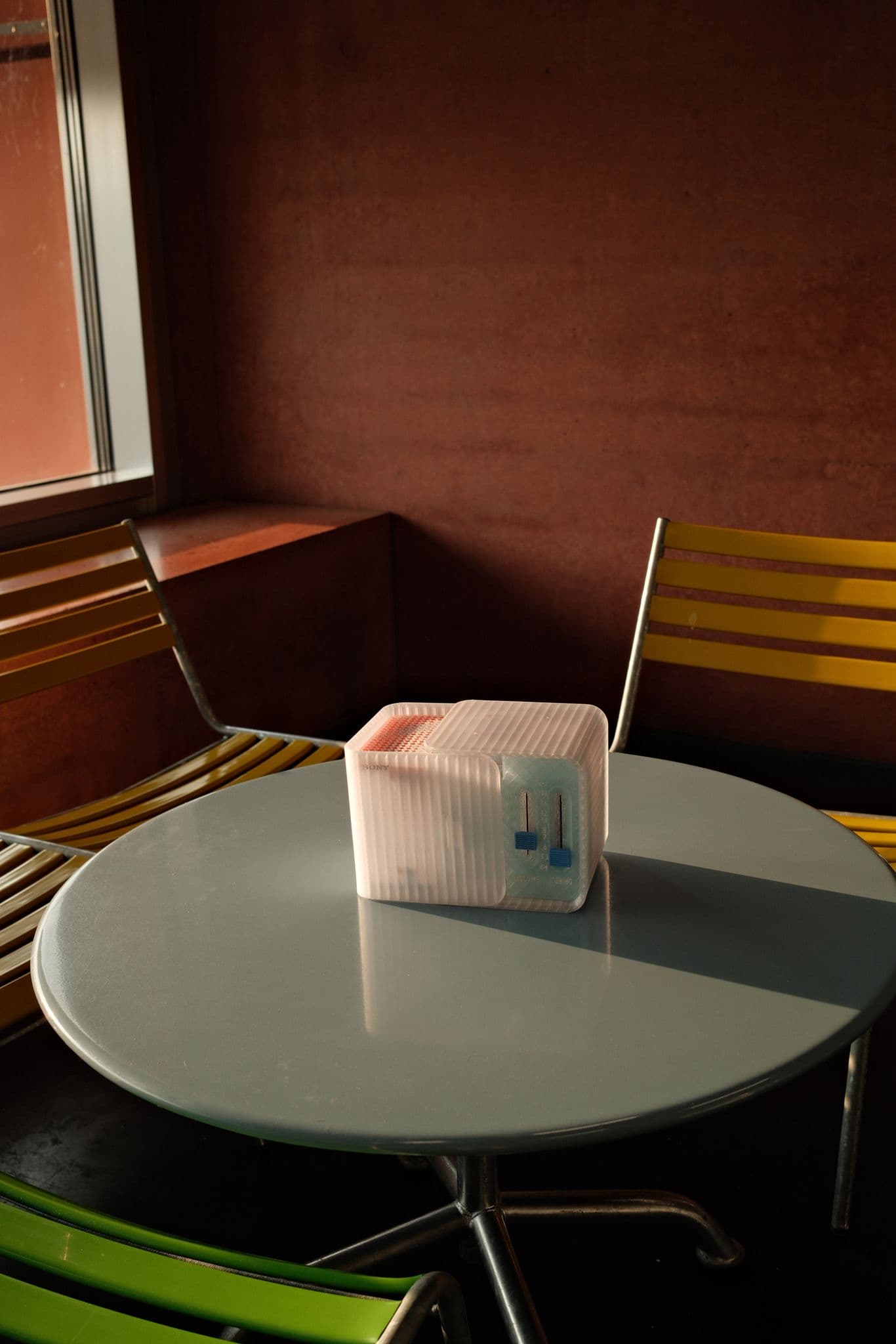
A 1970 Sony transistor radio reconstructed in semi-transparent 3D print, re-engineered with a rail-and-latch sliding mechanism for FDM constraints and fitted with modern streaming electronics.
Core Concept
A 1970 Sony transistor radio reconstructed in semi-transparent 3D-printed PET-G, re-engineered with a custom rail-and-latch sliding mechanism for FDM printing constraints, and fitted with modern streaming electronics — the same physical interface language, rebuilt for now.
My Role
- Industrial designfull 3D reconstruction of the 1970 TR-1825 form in Fusion 360
- Mechanism engineeringmulti-iteration development: cardboard models → laser-cut → final print
- Electronics integrationmodern streaming hardware fitted and wired into the vintage shell
- Documentationtechnical drawings and section analysis
The Object
A 1970 radio, rebuilt for now
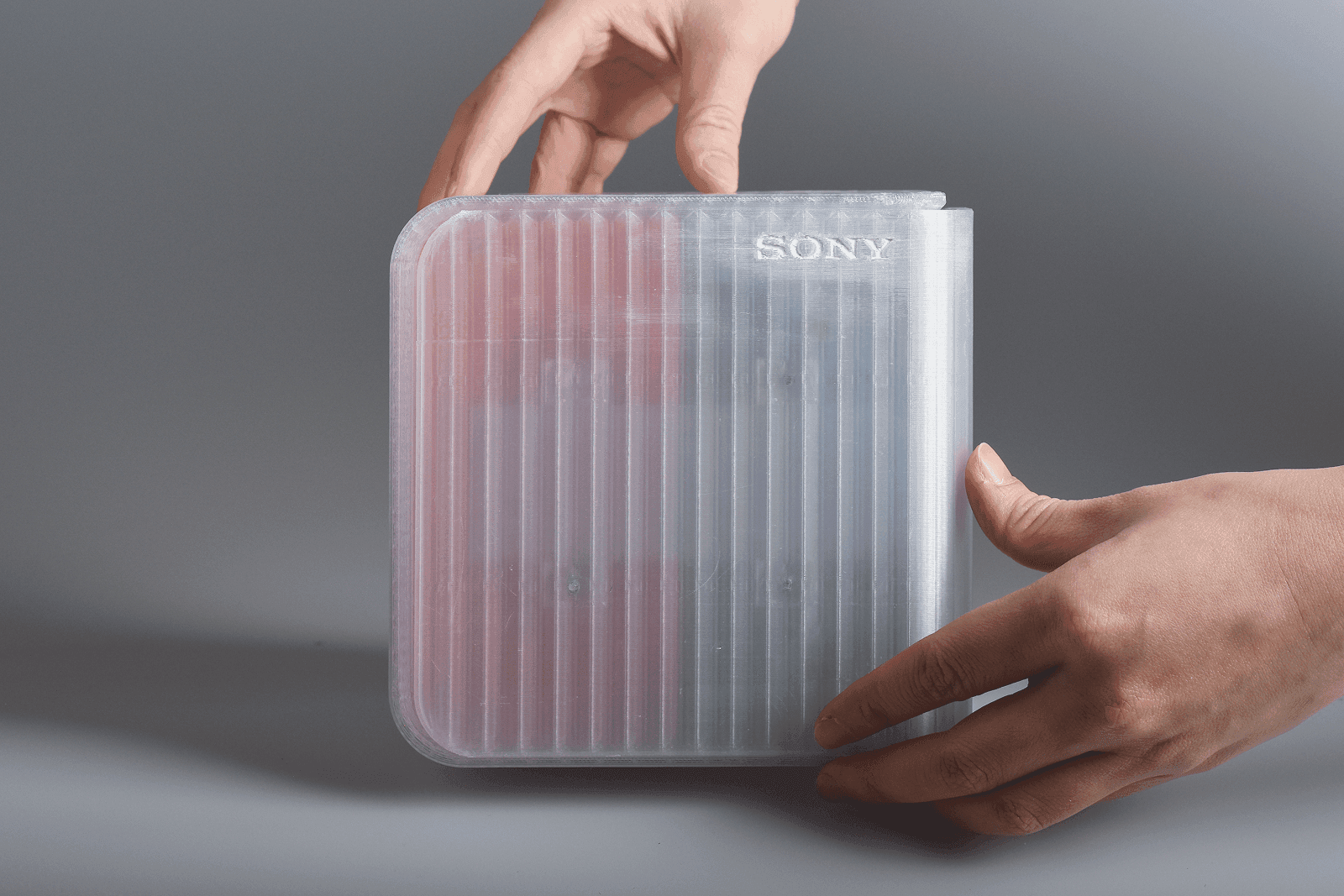
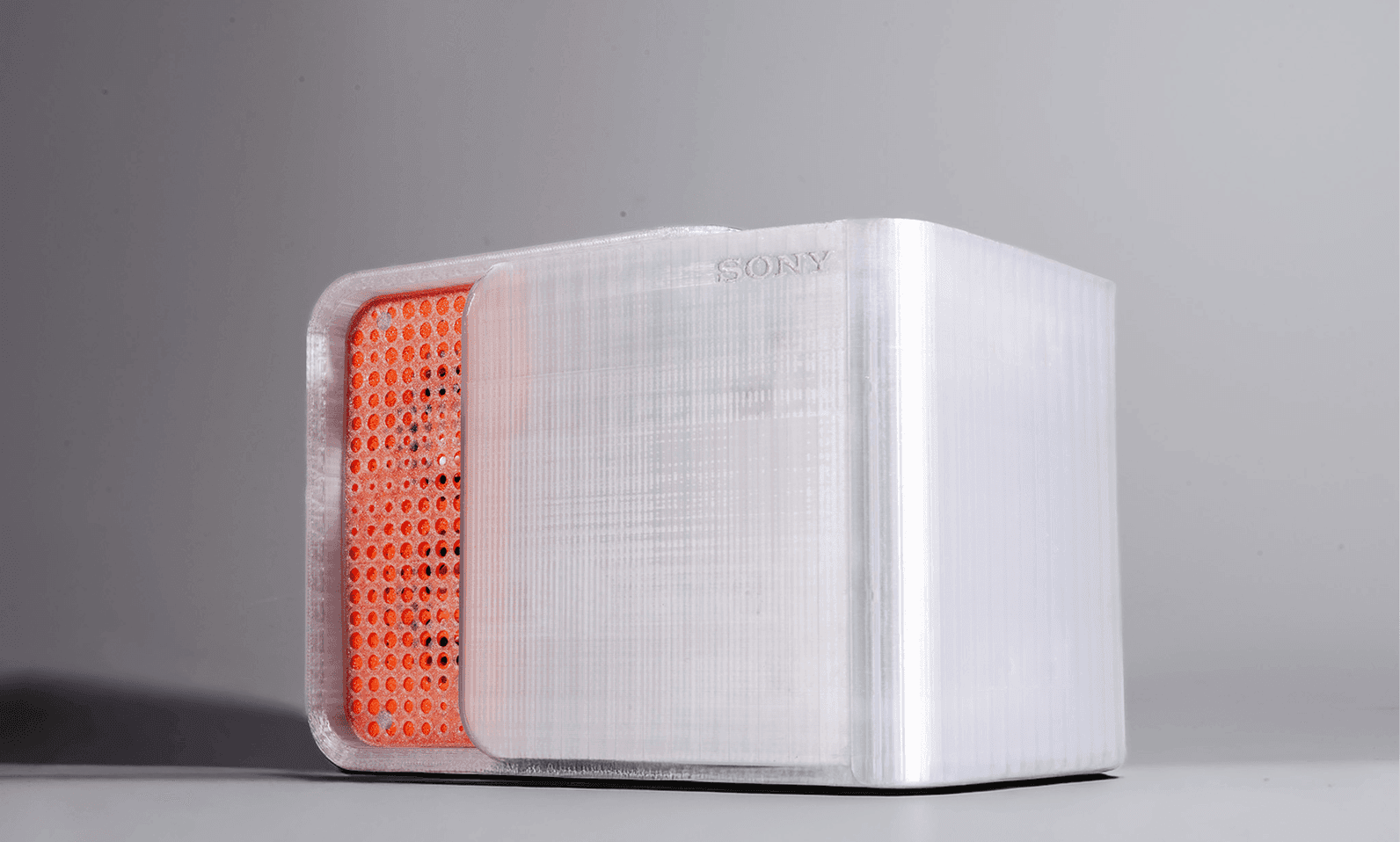
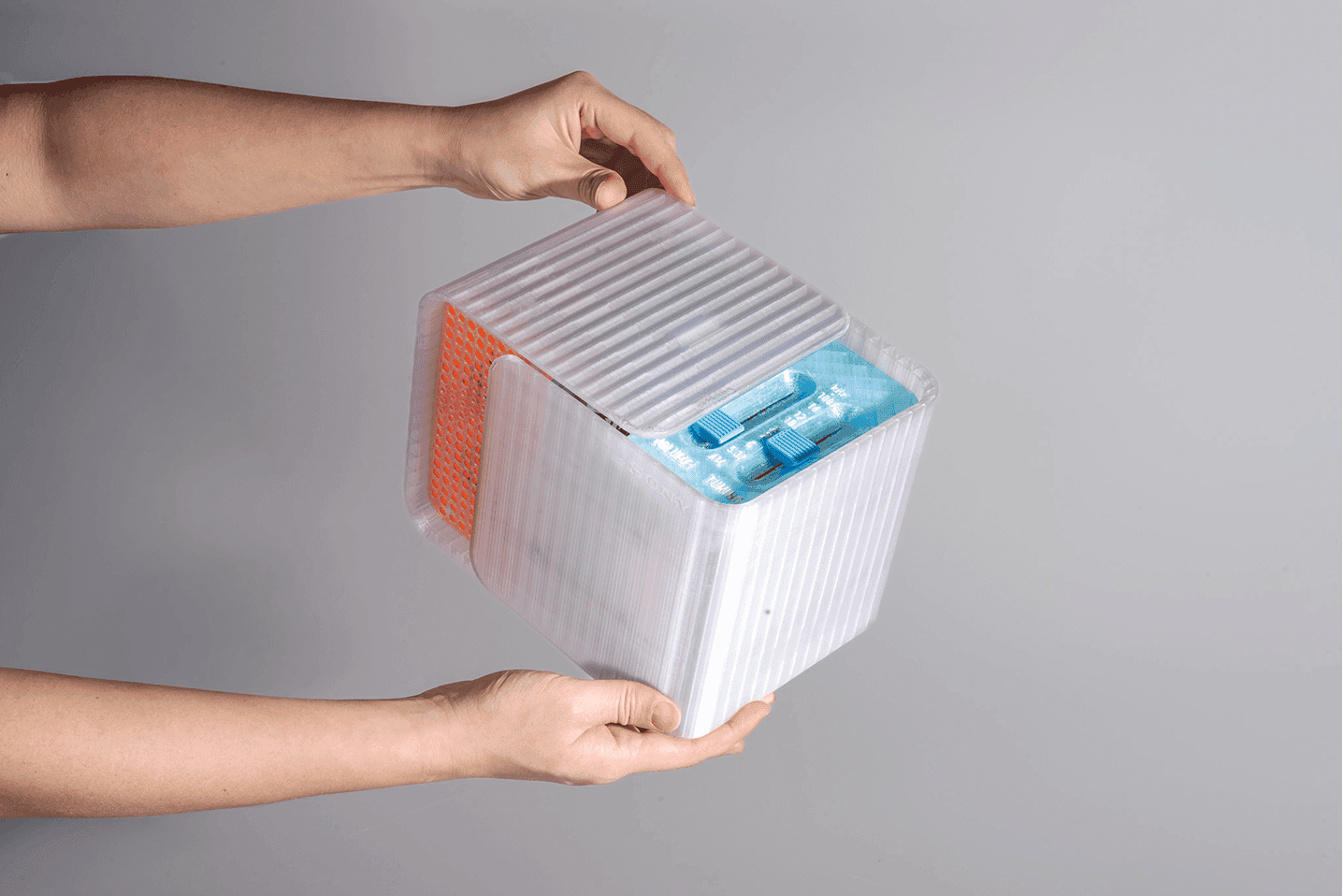
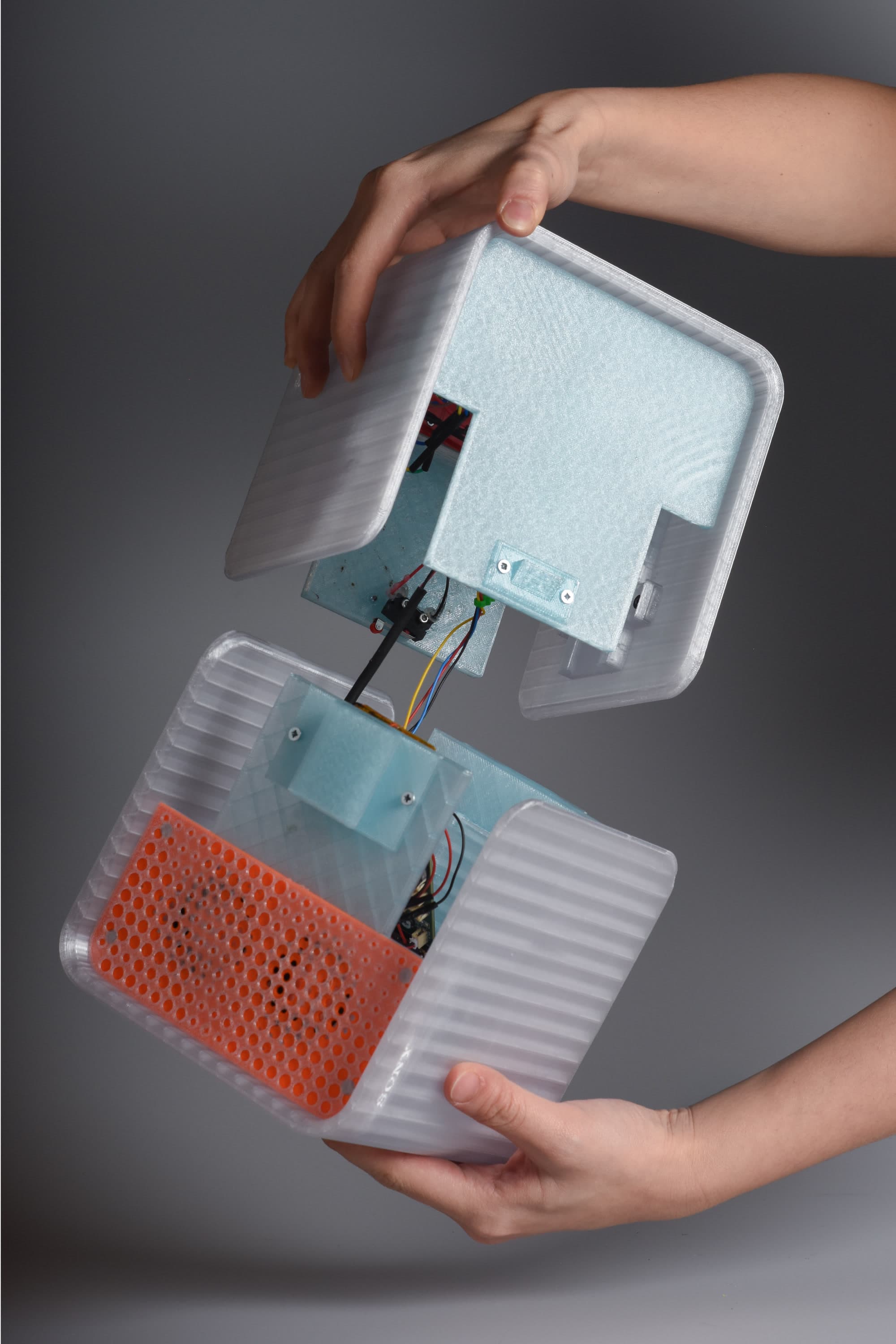
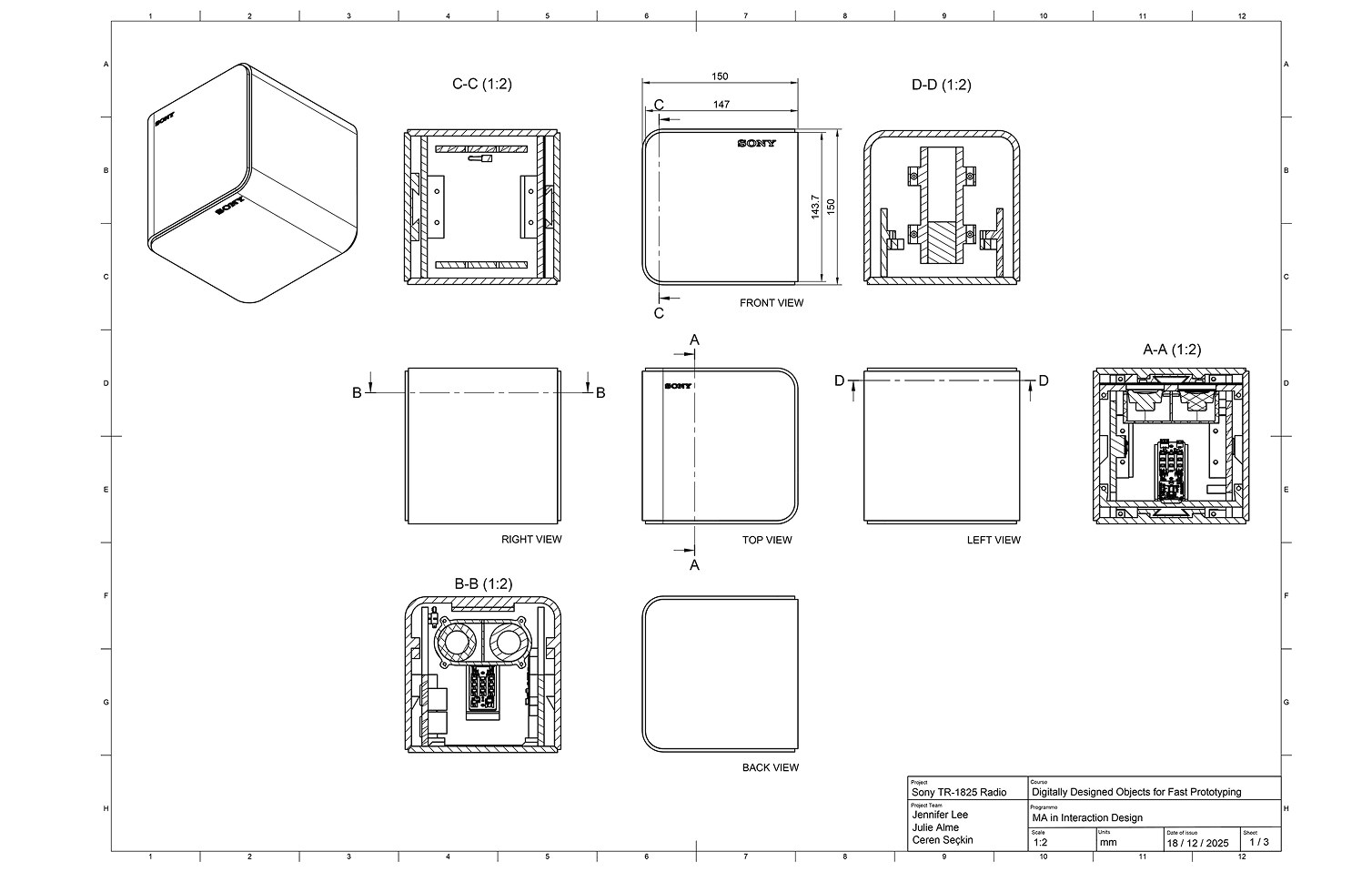
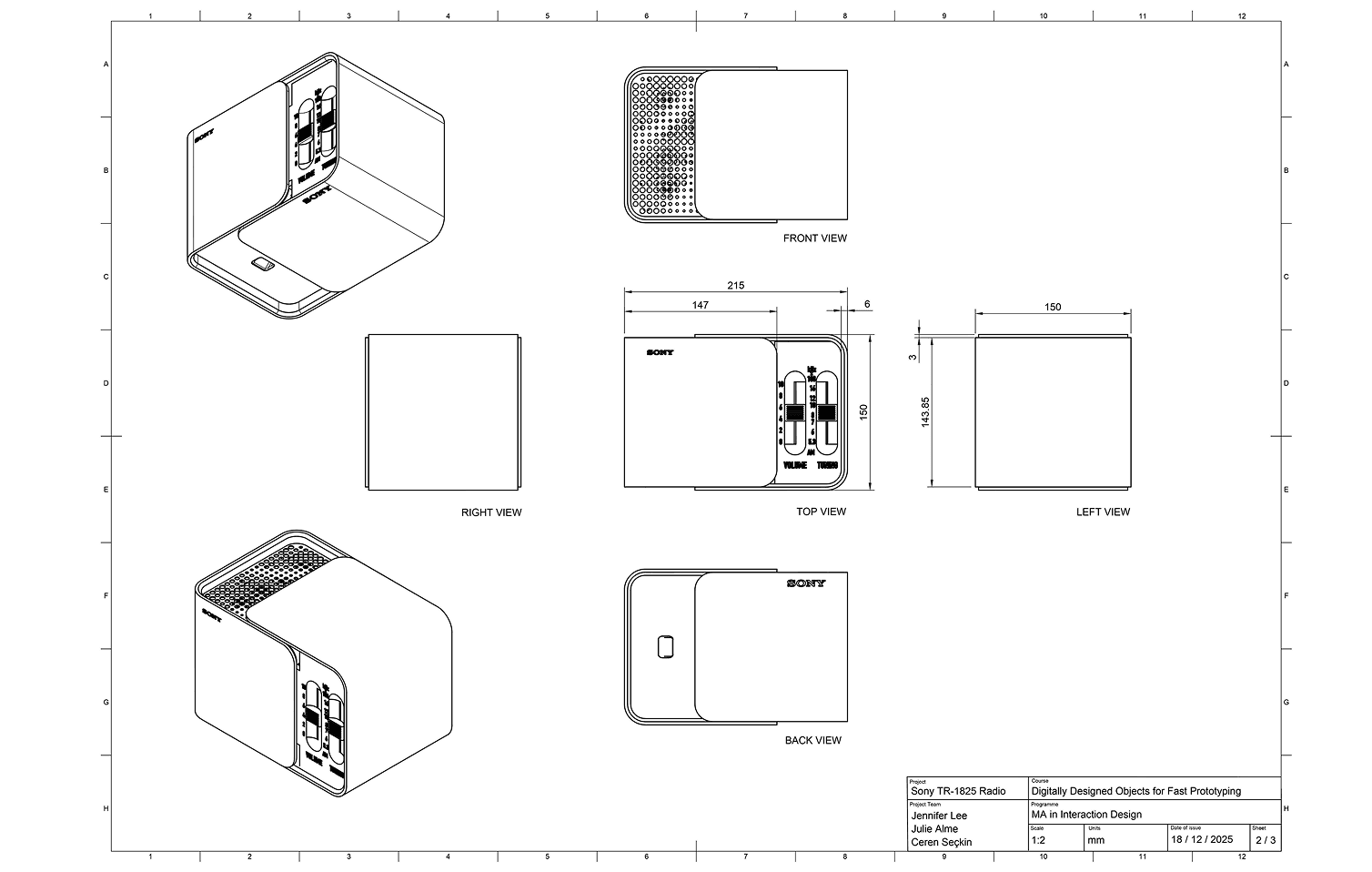
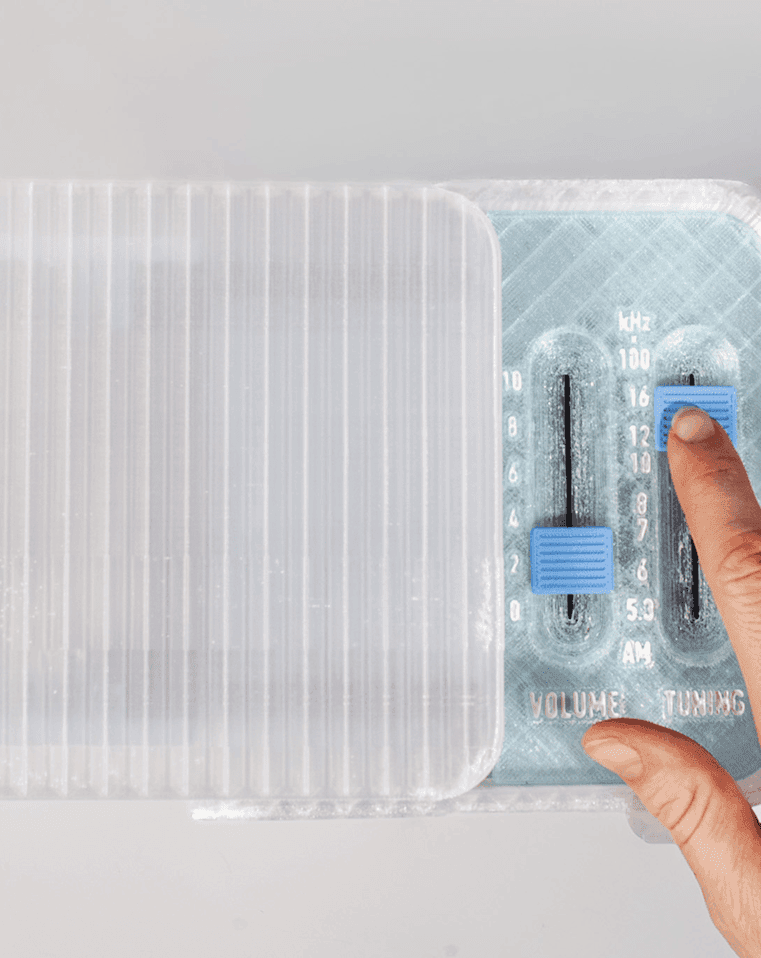
The Sony TR-1825 is a 1970 transistor radio rebuilt as a fully functional 3D-printed object with modern streaming electronics inside. The casing is semi-transparent PET-G. It slides open to reveal a second register: collapsed at 150mm, extended to 215mm.
The original TR-1825 was chosen for its mechanical elegance: a sliding form factor that changes function as it opens. The rebuild takes that gesture and reinterprets it for a contemporary object. It connects to streaming services rather than AM/FM broadcast, but uses the same physical interface language as the original.
Specifications
- Material: PET-G (FDM 3D print), semi-transparent casing
- Collapsed: 150mm / Extended: 215mm
- 5 streaming stations selectable via linear potentiometer
- Battery-powered: no mains connection required
Engineering Challenge
3D printing can't replicate injection moulding
The original TR-1825 uses injection-moulded snap-fit joints to hold the sliding mechanism together. Snap-fits require the elasticity of injection moulding: the plastic flexes on assembly and springs back into a locked position. 3D-printed parts don't have the same elastic behaviour: they snap, not spring.
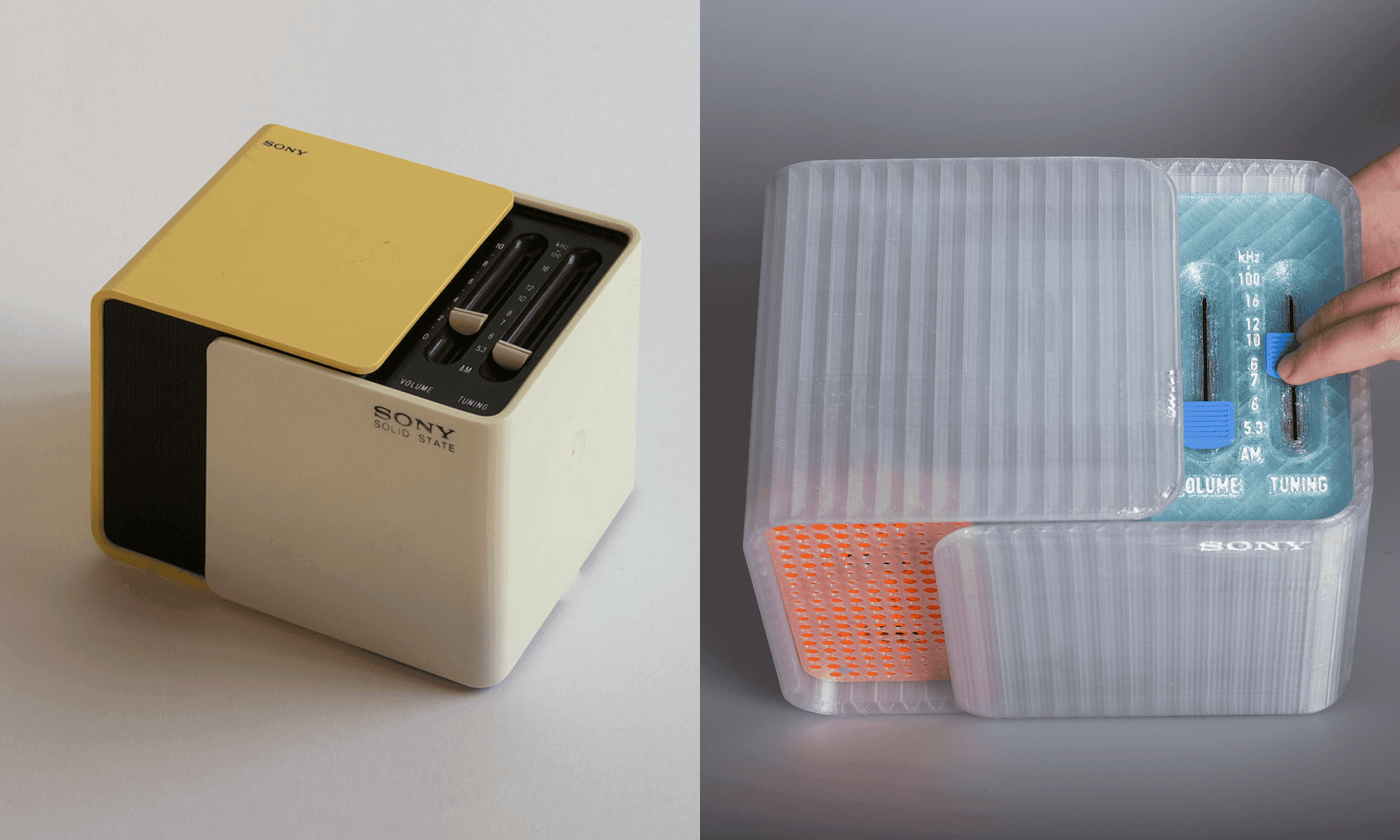
The constraint
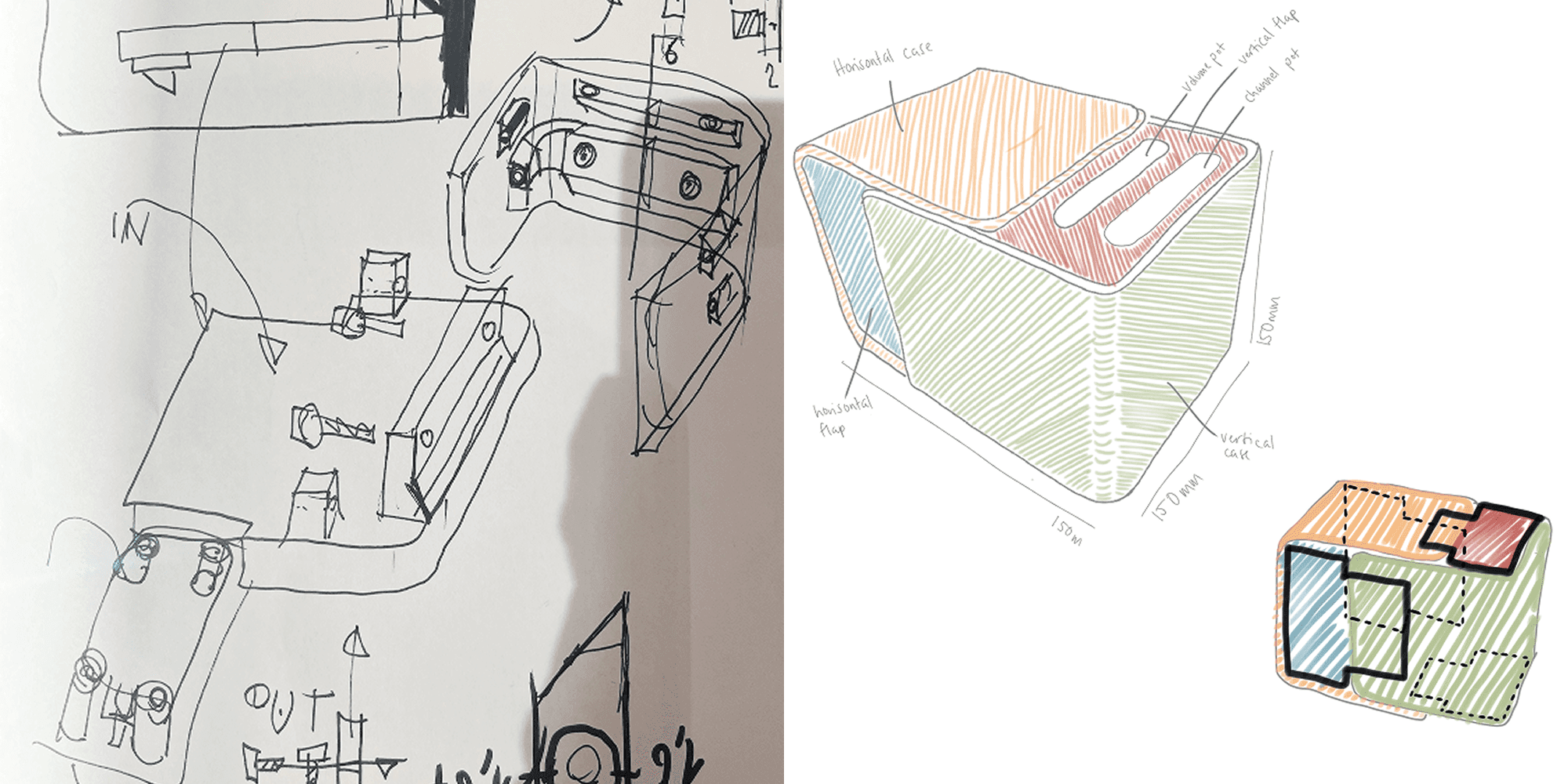
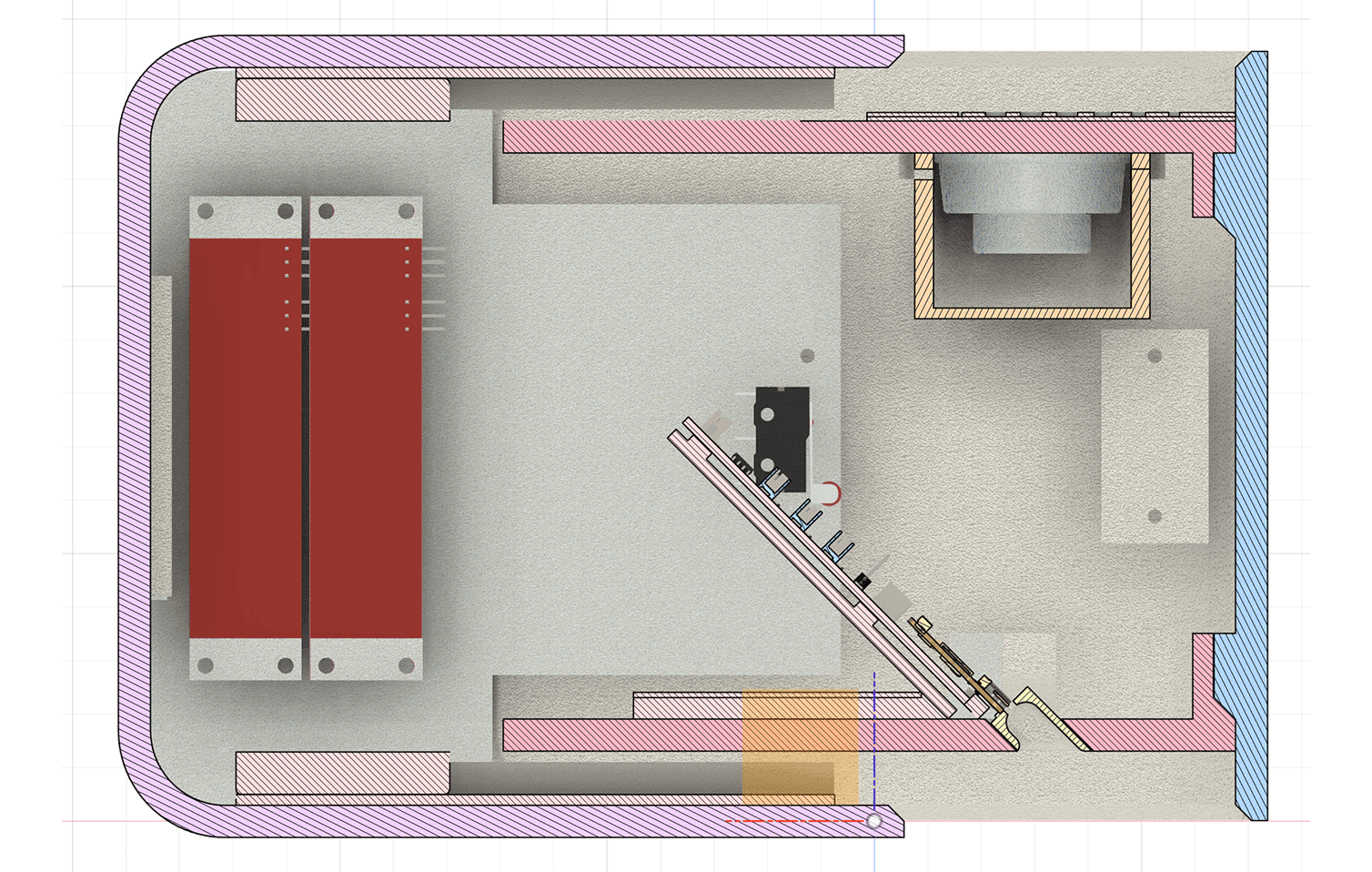
Every locking mechanism in the original design had to be reimagined from first principles for 3D printing. The solution: a custom rail system with a T-flap locking element that engages mechanically rather than through material elasticity. The geometry locks, not the plastic.
Mechanism
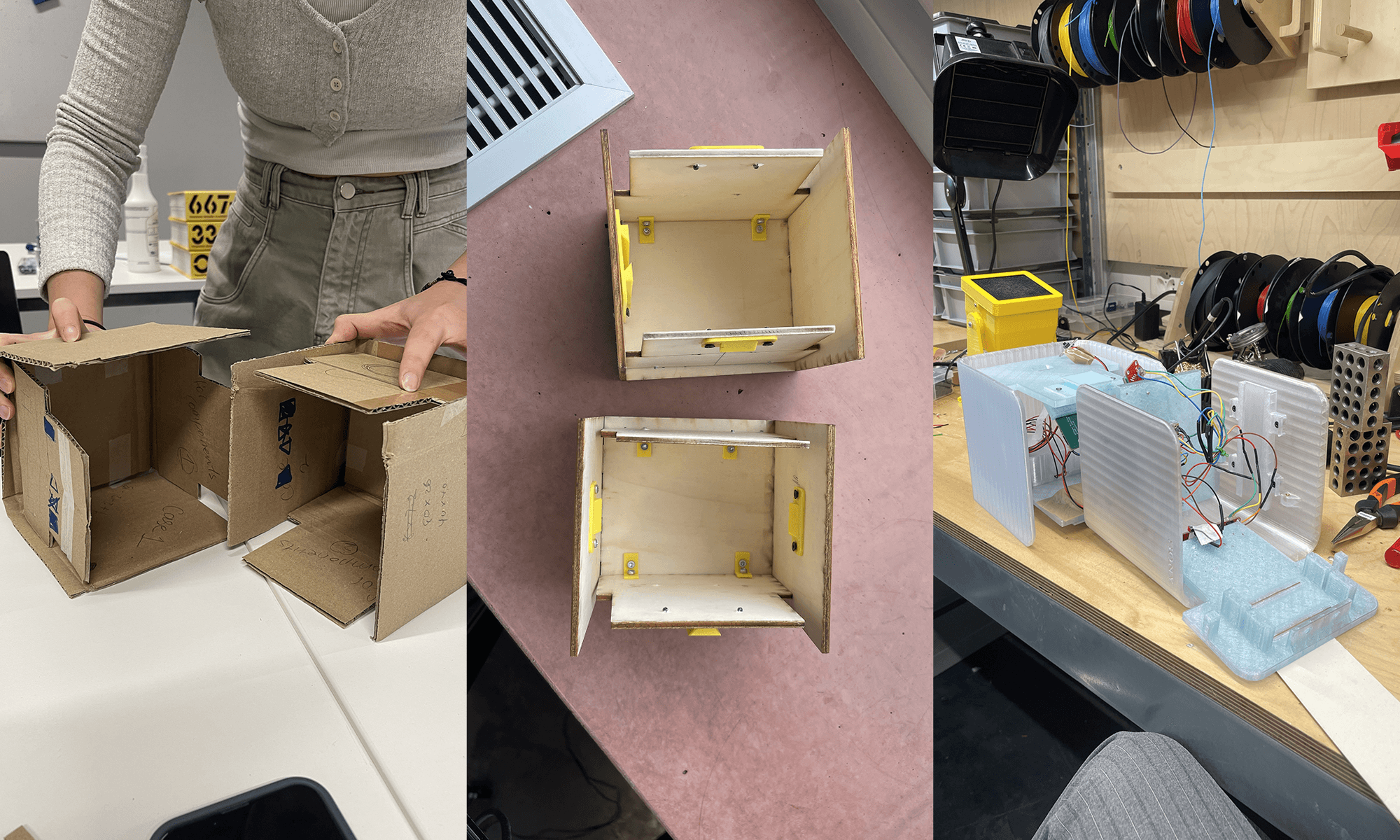
From cardboard to lasercut to print
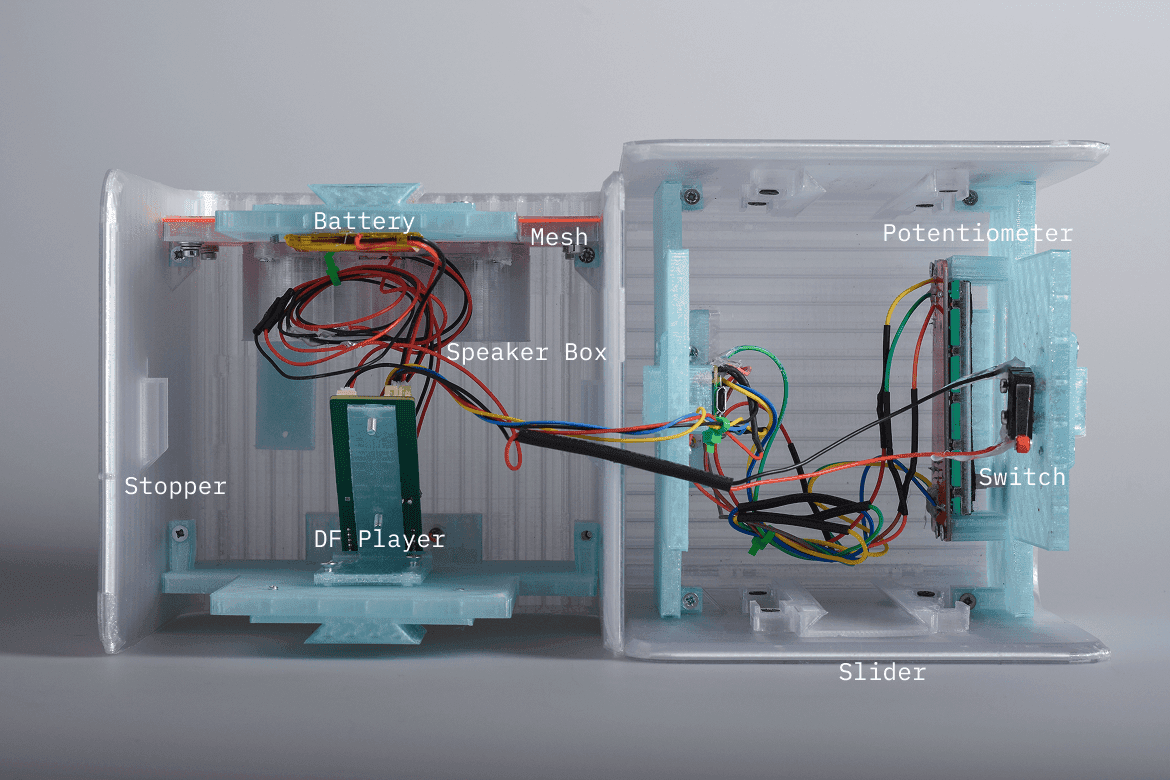
The mechanism was developed iteratively through three material stages: cardboard mockups to test the geometry of the sliding action, laser-cut acrylic to validate tolerances, and finally FDM-printed PET-G for the functional prototype.
Interaction
No buttons. No screen.
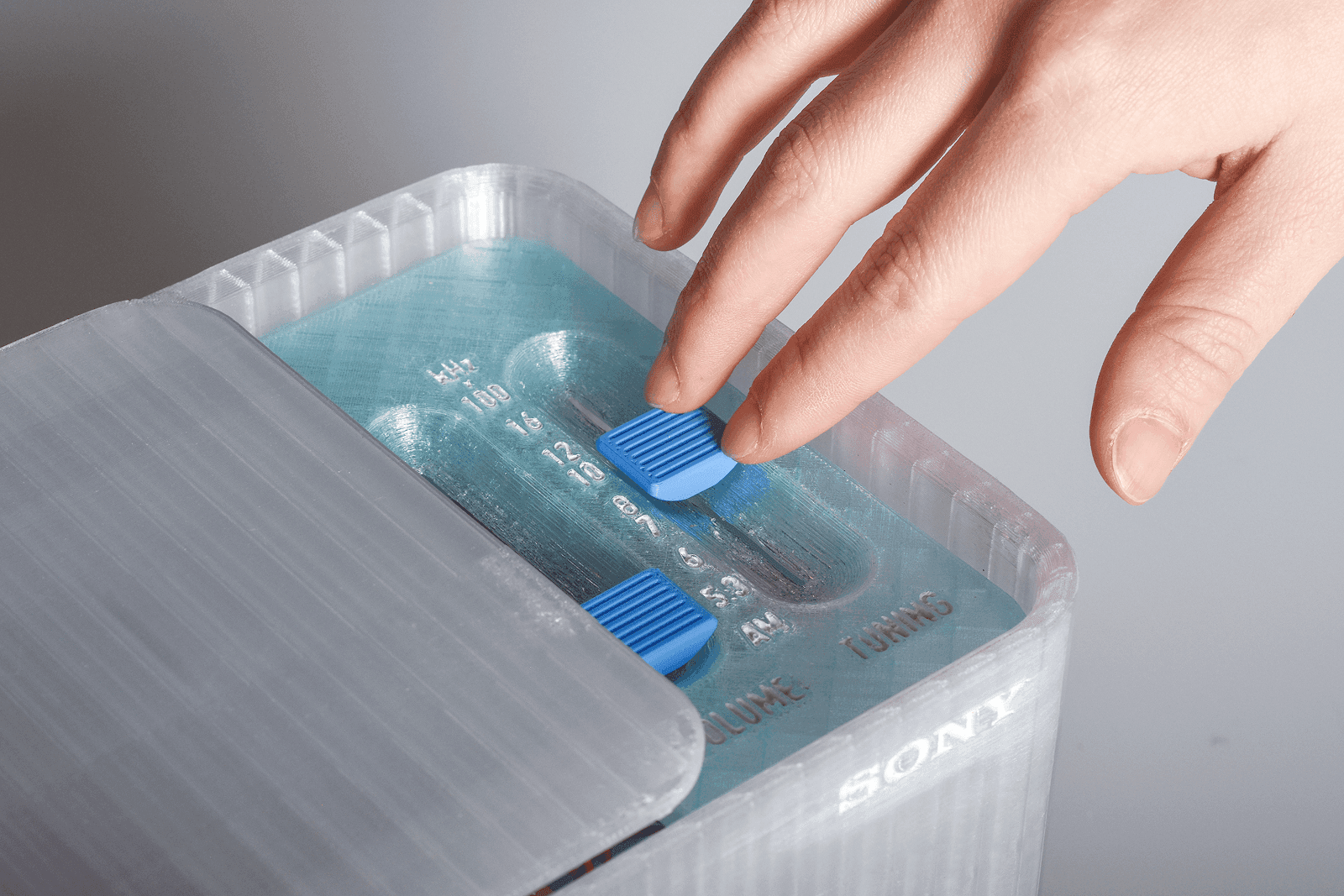
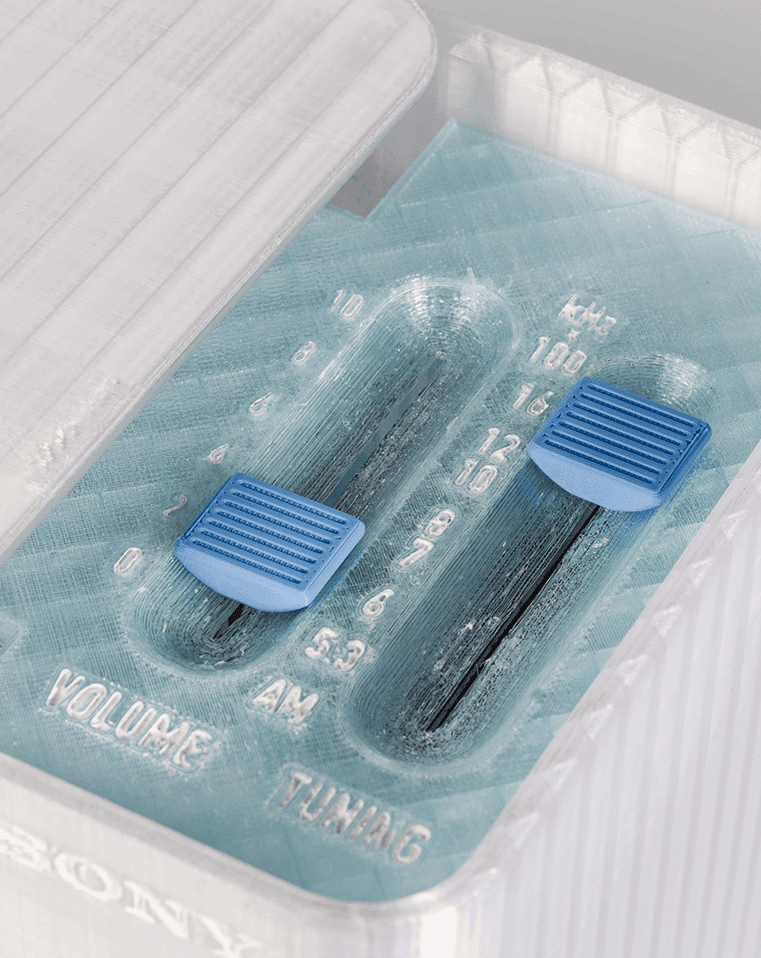
The interaction design follows the logic of the original: minimal controls, entirely tactile. There are no buttons or screens on the exterior: only the sliding form, two 90mm linear potentiometers (volume and station), and a roller limit switch that detects whether the radio is open or closed and changes mode accordingly.
Interaction model
- Closed → standby / off
- Open → active (roller limit switch triggers power)
- Left potentiometer → volume
- Right potentiometer → station selection (5 preset stations)
Outcome
Technical drawings and section analysis
Result
- Fully functional prototype demonstrated at SUPSI: the rebuild works as a radio with real streaming audio.
- Sliding mechanism re-engineered for 3D printing using a custom rail and T-flap lock that engages through geometry rather than material elasticity.
- All 5 streaming stations operational on battery power with potentiometer-based station and volume control.
Documentation
Scene photography

Every mechanical constraint is a design decision. The question is whether you made it deliberately or by accident.